Your skin does its real repair work while you sleep. That is when cell turnover speeds up, the barrier rebuilds, and active ingredients can finally do their job without UV interference. The problem is, most men either skip their evening routine entirely or use the wrong products in the wrong order, which often makes breakouts worse instead of better.
This guide covers a simple nighttime skincare for men with acne routine, how to use retinol without wrecking your skin, and when to consider prescription treatment.
Why Nighttime Skincare Matters More for Acne-Prone Skin?
Most men focus on their morning routine and treat the evening one as optional. For acne-prone skin, that is backwards. By bedtime, your face is carrying a full day of sunscreen, oil, sweat, and pollution. Sleeping with all of that on your skin is what turns a small clogged pore into a full pimple by morning.
Morning skincare focuses on protection. Nighttime skincare focuses on repair. If you skip your evening routine, sunscreen residue, oil, and dirt sit on your face for eight hours and clog pores while your skin tries to heal.
5-Step Nighttime Skincare Routine for Men with Acne
This evening acne routine takes about seven minutes and uses ingredients you can find at most drugstores. Each step in this nighttime skincare for men with acne plan targets a specific function. Some steps clear the day, others treat active breakouts, repair skin overnight, and prevent new pimples from forming.
1. Cleanse Thoroughly (Double Cleanse If Needed)
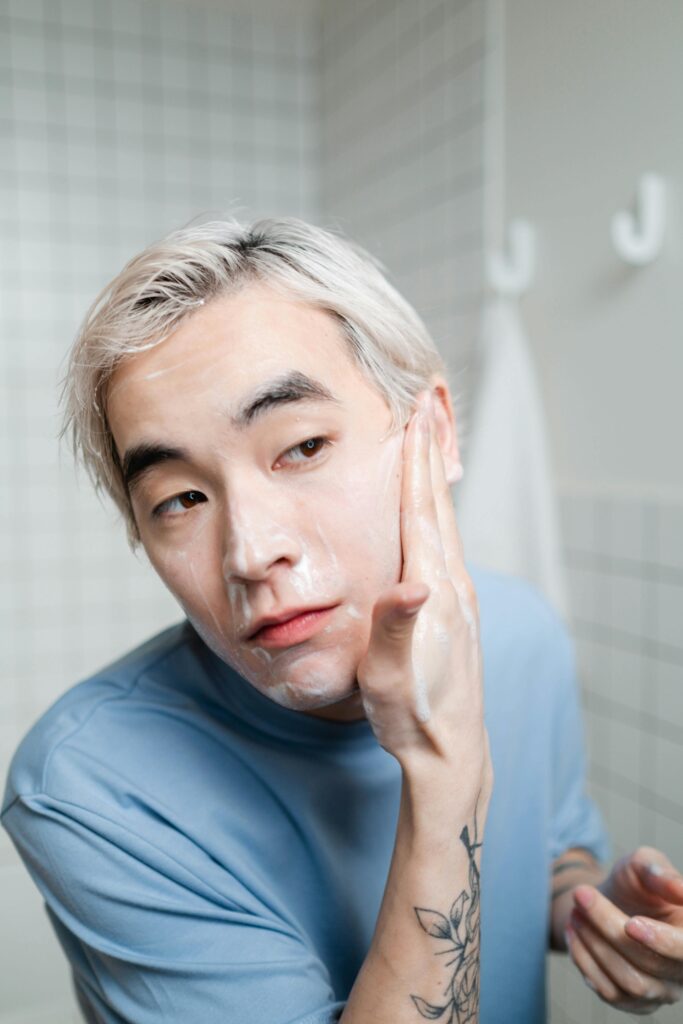
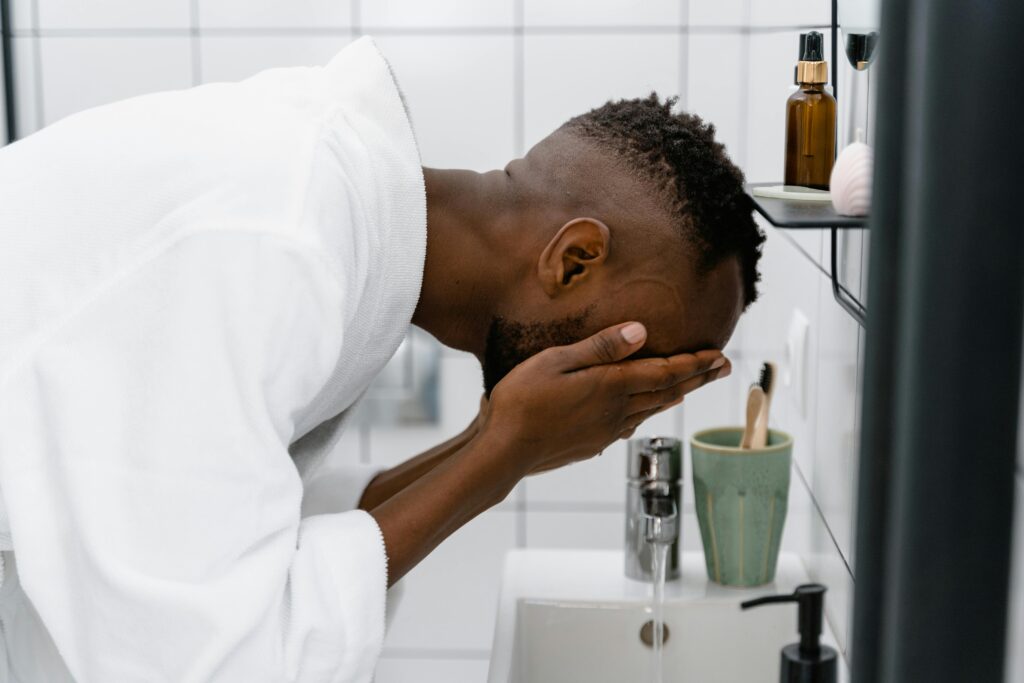
Start by washing your face with a gentle cleanser to remove sunscreen, sweat, oil, and pollution from the day. A single wash works for most men, but if you wear sunscreen, sweat heavily, or spend the day outside, double cleansing gives you a cleaner base.
A double cleanse means using an oil-based cleanser first to break down sunscreen and sebum, followed by a water-based cleanser to wash everything away. For acne-prone skin, choose an oil cleanser labeled non-comedogenic, then follow with a salicylic acid gel cleanser.
When to double cleanse:
- After wearing sunscreen for more than four hours.
- After workouts or heavy sweating.
- After a full day outdoors or in polluted environments.
Skip the double cleanse on rest days or low-activity nights. Over-cleansing weakens the barrier and triggers more oil production.
2. Apply a Targeted Acne Treatment
After cleansing, apply a treatment serum or spot treatment to active breakouts. The most effective ingredients for nighttime use are salicylic acid for clogged pores and benzoyl peroxide for inflamed pimples.
Use a thin layer or spot-treat. Wait about 60 seconds for the product to absorb before moving to the next step.
A few things to keep in mind:
- If you plan to use retinol in step 3, skip benzoyl peroxide tonight. The two cancel each other out and irritate the skin.
- Niacinamide serums pair safely with everything and are a strong all-around treatment for acne, redness, and oil control.
- Spot treat rather than slathering on whole-face benzoyl peroxide unless your dermatologist has advised otherwise.
3. Use Retinol or a Retinoid
Retinol is the most powerful ingredient you can add to a skincare routine for acne. It speeds up cell turnover, unclogs pores from the inside, fades dark spots from old breakouts, and prevents new comedones from forming. It only works at night because sunlight breaks it down.
Three types to know:
- Retinol: Over-the-counter, gentlest version. Start here.
- Adapalene (Differin): Available without a prescription in the US, stronger than retinol, specifically formulated for acne.
- Tretinoin: Prescription only, the strongest option, used for moderate to severe acne.
Apply a pea-sized amount across your full face after cleansing and any treatment serum. Avoid the corners of your nose, the sides of your mouth, and the area right under your eyes, where skin is thinnest.
If you are new to retinol, do not use it every night. Start with two nights a week for two weeks, then move to three nights, then every other night, then nightly. This slow ramp-up prevents the worst of the irritation.
4. Moisturize for Overnight Repair
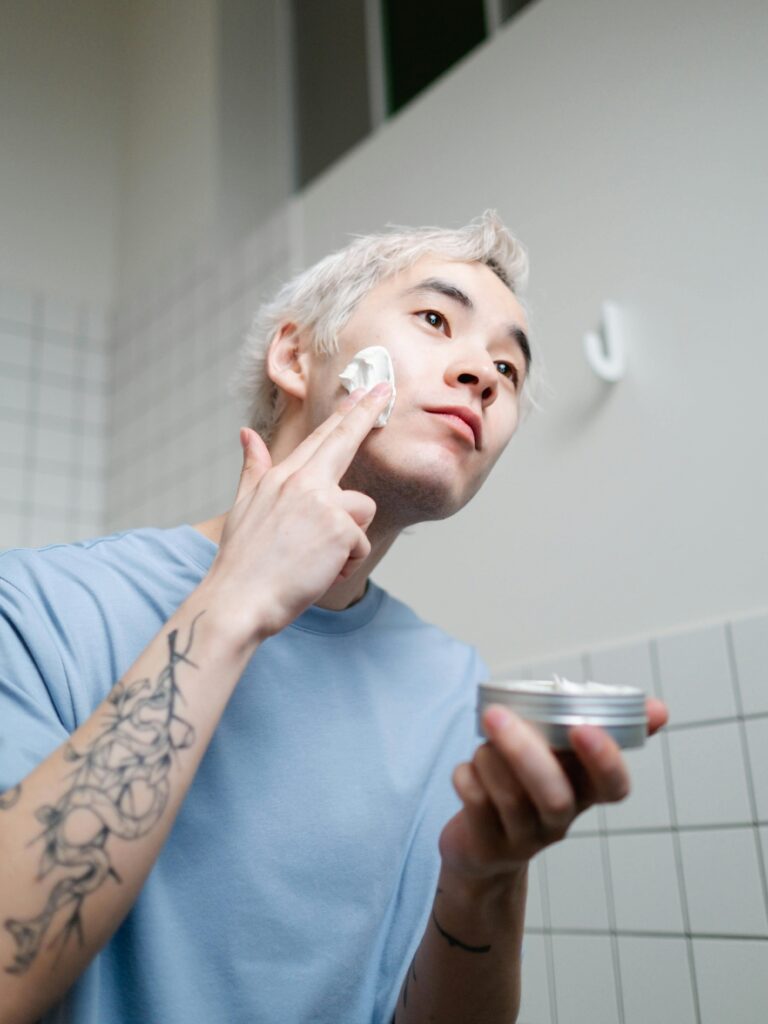
Apply a moisturizer to seal in your treatments and support overnight barrier repair. Nighttime moisturizers can be slightly richer than your morning moisturizer because there is no sunscreen layered on top.
Look for these ingredients in a night repair skincare moisturizer:
- Ceramides: Rebuild the skin barrier.
- Hyaluronic acid: Pulls moisture into the skin.
- Niacinamide: Calms inflammation and regulates oil.
- Peptides: Support skin repair and texture.
Avoid heavy occlusives like petroleum jelly, coconut oil, or thick balms on acne-prone areas. These trap heat and bacteria and trigger more breakouts overnight.
5. Sleep on a Clean Pillowcase
Your face spends six to eight hours pressed against your pillowcase every night. Whatever is on that fabric, including oil, dead skin, sweat, hair product residue, and bacteria, transfers right back onto your skin.
Change your pillowcase every two to three nights. If you have active breakouts, change it every other night. Cotton works fine, but silk pillowcases reduce friction, which can help if your acne is concentrated on one cheek from your sleeping position.
How to Use Retinol Safely With Other Acne Actives?
Most men quit retinol because they layer it wrong, even when retinol itself would have worked. The rules below help you build a retinol routine that prevents the irritation, peeling, and dryness that send people back to square one.
The three-layering rules:
- Never mix retinol and benzoyl peroxide in the same routine. Benzoyl peroxide oxidizes retinol and deactivates it. Use benzoyl peroxide in the morning and retinol at night, or alternate nights.
- Salicylic acid and retinol can coexist, but space them out. Use a salicylic acid cleanser at night, wait until your skin is fully dry (about ten minutes), then apply retinol. Or use them on alternating nights.
- Niacinamide pairs safely with everything. It even helps reduce retinol irritation, so applying a niacinamide serum before retinol is a smart move for sensitive skin.
For sensitive skin, try the sandwich method. Apply moisturizer, wait two minutes, apply retinol, wait two minutes, and apply moisturizer again. The buffer reduces irritation without affecting how well retinol works.
If your skin starts flaking or burning, take a break for two to three nights, focus on hydration, and restart at a lower frequency.
Best Acne Ingredients to Use at Night vs. Avoid
Not every active ingredient belongs in a nighttime routine. Some work best at night, some only at night, and a few should be skipped entirely if you are acne-prone.
Use at night:
- Retinol or retinoids: Sunlight degrades them, so PM only.
- Salicylic acid (BHA): Works overnight to unclog pores.
- Niacinamide: Anytime, but pairs well with retinol at night.
- Hyaluronic acid: Locks in overnight hydration.
- Lactic acid: Gentle exfoliation, best at night.
Use sparingly or skip:
- Vitamin C: Better in the morning for antioxidant protection.
- Heavy face oils: Coconut, cocoa butter, and shea on the face clog pores.
- Alcohol-based toners: Strip the barrier and worsen acne over time.
- Foaming exfoliants more than twice a week: Cause micro-tears and inflammation.
Stick to one or two actives per night. Stacking three or more is the fastest way to wreck your barrier.
What to Expect During Retinol Purging and How Long It Lasts?
Retinol purging is a temporary phase where your skin breaks out more than usual after starting retinol. It happens because retinol speeds up cell turnover, which pushes existing clogs and pimples to the surface faster. This phase is common when starting a nighttime skincare for men with acne routine that includes active ingredients like retinol.
This is the number one reason men quit retinol within a month. Pushing through the purge is what separates the men who get clear skin from the men who give up.
What purging looks like:
- Small breakouts in your usual problem areas rather than new ones.
- Pimples come up and clear within a few days instead of lingering.
- Slight flaking, dryness, or redness.
What is not purging (and means you should stop):
- Cystic, painful pimples in new areas of your face.
- Severe burning, swelling, or peeling.
- Hives or rash-like irritation.
The purge typically lasts four to six weeks. After that, breakouts slow down, skin texture smooths, and dark spots from old acne start fading. Full results take three to six months of consistent use.
If your skin is still purging at week eight, scale back to two or three nights a week and check in with a dermatologist.
When to Consider Prescription Tretinoin or Adapalene?
Over-the-counter retinol works for mild to moderate acne. If your acne is more stubborn, prescription retinoids are the next step and often the most effective treatment for adult male acne.
Consider a prescription if:
- Over-the-counter retinol has not improved your skin after twelve weeks.
- You have moderate to severe acne with cysts or nodules.
- Acne is leaving scars or stubborn dark spots.
- Your skin has plateaued after early progress.
Prescription retinoids are stronger, so the purging phase can feel more intense at first. Stick with the routine your dermatologist recommends, and give it a full three months before judging the results.
Takeaway
Your nighttime routine is where most of your real progress happens. Cleanse properly, treat your active breakouts, layer retinol carefully, moisturize for repair, and sleep on a clean pillowcase.
Retinol is the difference-maker, but only if you use it patiently. Start slow, expect a purge, and give it three to six months. The men who push through that window are the ones who end up with skin they actually like.
FAQs
Should men with acne use retinol every night?
Not at first. Start with two nights a week, then build up to three, every other night, and finally nightly. Jumping straight to daily use causes flaking, redness, and a longer purge phase.
Can men use salicylic acid and retinol together?
Yes, but space them out. Use a salicylic acid cleanser at night, wait until skin is fully dry, then apply retinol. Or alternate them on different nights. Applying both wet on the skin at the same time often causes irritation.
What is the best nighttime moisturizer for men with acne?
The best nighttime moisturizer for men with acne is an oil-free, non-comedogenic formula with ceramides, hyaluronic acid, and niacinamide. Avoid heavy creams, coconut oil, and petroleum-based occlusives, which trap heat and bacteria overnight and worsen breakouts.
Should men wash their faces at night even if they did not go outside?
Yes. Even on indoor days, your skin collects sebum, sweat, and dead skin cells. Sleeping with that on your face clogs pores and worsens acne. A gentle cleanse takes 30 seconds and prevents overnight breakouts.
Why does my acne get worse when I start a nighttime routine?
This is usually retinol purging. Retinol speeds up cell turnover, which pushes existing clogs to the surface faster. The breakouts feel new, but were already forming. Purging lasts four to six weeks and resolves on its own.