Wondering, “Should Men With Acne Moisturize?” Yes, men with acne should moisturize every day. Most men with acne think moisturizer is the enemy. The skin already feels greasy, so why add more product? That instinct is exactly why breakouts keep coming back.
Skipping moisturizer triggers oil rebound, weakens the skin barrier, and makes acne treatments more irritating. The right way to moisturize acne men’s skin is to choose a non-comedogenic, oil-free formula and apply a thin layer twice a day. This guide covers what to use, how much to apply, and how to avoid the common mistakes that turn a helpful step into a breakout trigger.
Should Men With Acne Moisturize Daily?
Men with acne need to moisturize daily because their skin produces more oil and faces constant disruption from shaving. Harsh cleansers strip the barrier even further, and all three problems get worse when the skin is left dry.
Dry skin signals the sebaceous glands to produce more oil, and that excess oil mixes with dead skin cells to clog pores. Acne treatments like benzoyl peroxide, salicylic acid, and retinol speed this up by drying the skin out as part of how they work. Without a moisturizer to balance that effect, irritation builds fast, and most men quit the treatment before it has a chance to clear their acne.
A clinical study published in the International Journal of Cosmetic Science found that sebum production in male skin stays higher than in women and remains stable with age, while women’s sebum output decreases over their lifetime. More oil does not mean hydrated. It means oily on the surface and dry underneath, which is the worst combination for breakouts. Daily shaving makes it worse by removing part of the outer skin layer along with the hair, and moisturizer rebuilds what shaving takes away.
Ingredients to Look For in a Non-Comedogenic Moisturizer for Acne
A non-comedogenic moisturizer has been tested to make sure it does not clog pores. For acne-prone men, the right formula hydrates without adding oil, supports the barrier, and works alongside acne treatments.
Key Ingredients That Hydrate Without Clogging
- Hyaluronic acid: Pulls water into the skin without adding oil.
- Niacinamide: Calms redness, regulates oil, and reduces post-acne marks.
- Glycerin: A humectant that draws moisture into the surface layer.
- Ceramides: Rebuild the skin barrier weakened by shaving and actives.
- Dimethicone: A silicone that reduces water loss without a greasy feel.
Ingredients to Avoid
- Coconut oil: High on the comedogenic scale. Clogs pores fast on the face.
- Cocoa butter and lanolin: Heavy, occlusive, and pore-blocking.
- Petrolatum (Vaseline): Traps heat and bacteria over breakouts.
- Isopropyl myristate: A common pore-clogger hidden in many “lightweight” lotions.
- Heavy fragrances and essential oils: Trigger irritation and barrier damage on already sensitive skin.
How to Read a Label?
Look for these four words on the front of any moisturizer:
- Non-comedogenic
- Oil-free
- Fragrance-free
- For acne-prone skin
If a product carries all four, it is safe to test. If it is missing two or more, skip it.
How to Apply Moisturizer the Right Way?
Most men either use too much, apply it at the wrong time, or skip the step that locks it in. The fix is simple, but the order matters.
Amount
Use a pea-sized drop for the full face. A thin layer hydrates. A thick layer suffocates pores and traps oil.
Timing
- Morning: Cleanse, apply acne treatment, wait 30 seconds, apply moisturizer, finish with SPF.
- Night: Cleanse, apply acne treatment or retinol, wait 60 seconds, and apply moisturizer as the last step.
Application
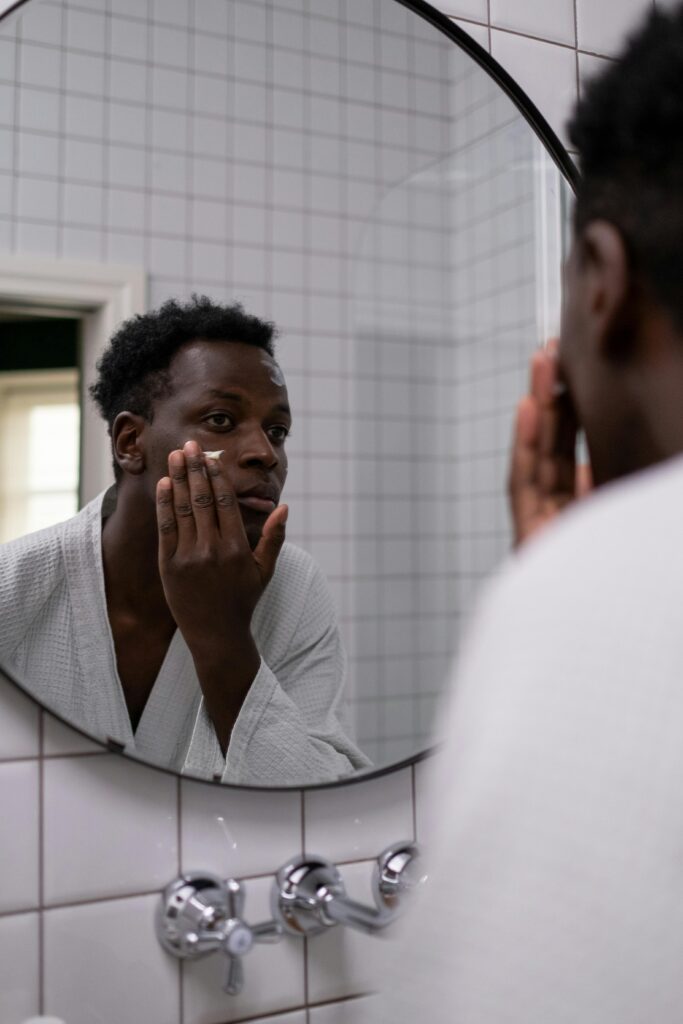
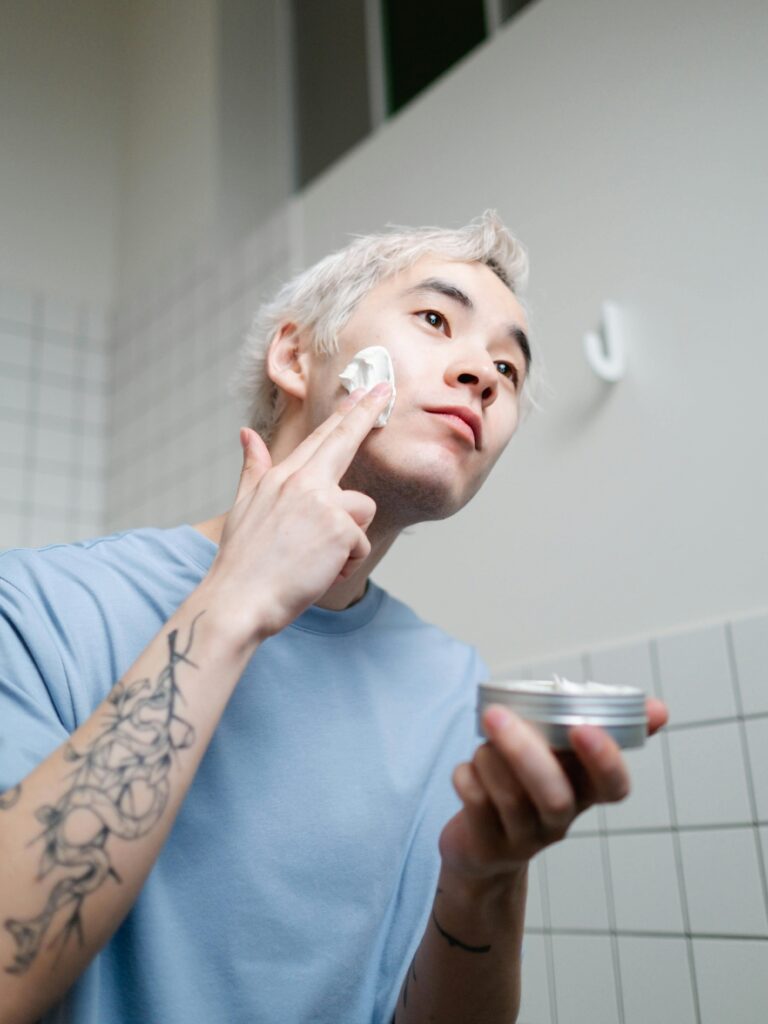
Apply moisturizer to slightly damp skin within 60 seconds of cleansing. Damp skin holds the product better. Press it into the skin with your fingertips instead of rubbing. Rubbing breaks down the barrier shaving already weakened.
Around Acne Actives
- Benzoyl peroxide: Apply, wait one minute, then moisturize.
- Salicylic acid: Apply, wait until fully dry, then moisturize.
- Retinol or retinoids: Use the sandwich method. Moisturize, wait two minutes, apply retinol, wait two minutes, moisturize again. This cuts irritation without reducing how well retinol works.
A 12-week double-blind study published in the Journal of Drugs in Dermatology found that men using a ceramide-containing moisturizer alongside benzoyl peroxide and adapalene treatment had significantly lower inflammatory lesion counts and faster barrier recovery than those using a basic cleanser alone. This proves that pairing the right moisturizer with active treatments speeds up results and reduces side effects.
How Much Moisturizer Is Too Much?
Over-moisturizing happens when the skin cannot absorb what is applied, leaving a layer that mixes with sebum and clogs pores. The fix is using less and choosing a lighter formula.
Signs you are using too much:
- Persistent shine 30 minutes after applying.
- New whiteheads in areas where you apply the most product.
- Skin feels heavy, suffocated, or sticky throughout the day.
- Makeup or sunscreen pills off the surface instead of blending.
What to do about it:
- Cut your dose in half. A pea-sized drop is enough.
- Switch from cream to gel if you have oily skin.
- Skip reapplication during the day. Twice daily is the maximum.
Choosing the Right Moisturizer by Skin Type
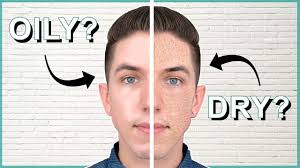
The best hydration for acne skin depends on your specific skin type, not just the fact that you have acne. Here is the breakdown of moisturizers by skin type:
- Oily and acne-prone: Lightweight gel with hyaluronic acid and niacinamide.
- Dry and acne-prone: Cream with ceramides and glycerin.
- Combination: Lightweight lotion that hydrates the cheeks without weighing down the T-zone.
- Sensitive and acne-prone: Fragrance-free formula with centella asiatica or oat extract.
- Beard area: Fast-absorbing, non-comedogenic lotion. Skip beard oils on the face if you break out under the beard.
Patch test any new product on your jawline for three days before using it across your whole face.
Moisturizer and Shaving: The Acne Connection Most Men Miss
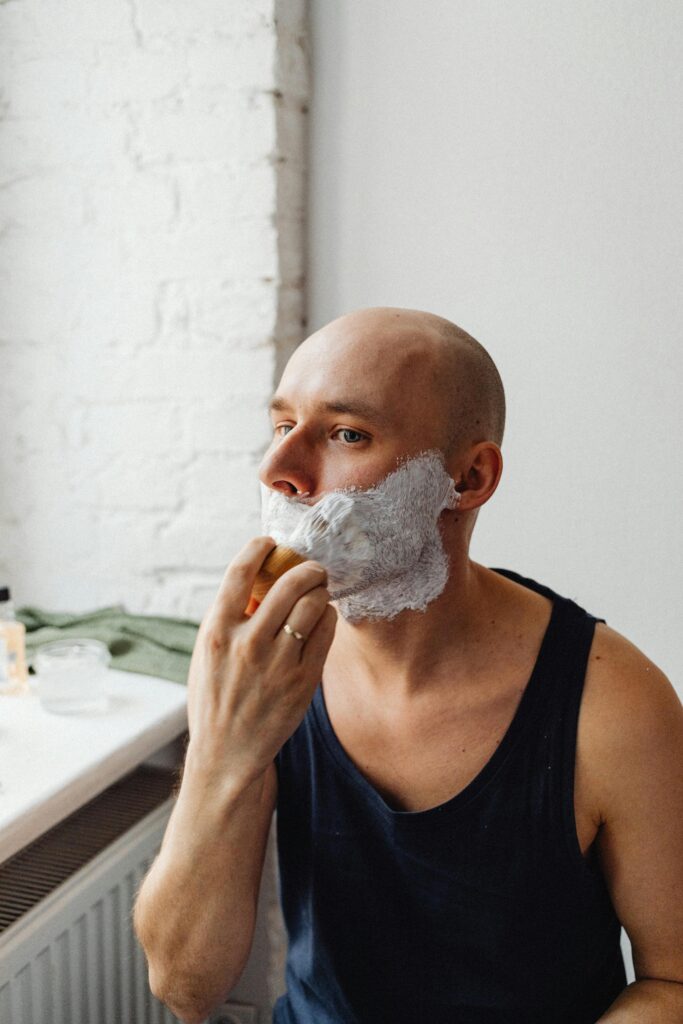
Shaving damages the skin barrier and creates entry points for bacteria. Applying moisturizer right after shaving repairs that damage and prevents post-shave breakouts. In fact, around 20% of the material removed during male facial shaving is skin tissue, not hair, which is a measurable barrier injury happening every day or every other day. Most men do nothing to support that recovery.
What to do instead:
- Skip alcohol-based aftershaves. They strip the barrier further and worsen acne.
- Apply a thin layer of non-comedogenic moisturizer within two minutes of finishing your shave.
- Avoid heavy beard oils on acne-prone areas. They sit on top of the skin and clog pores.
A face moisturizer is not the same as a beard moisturizer. Beard products are formulated to soften hair and often contain comedogenic oils that trigger breakouts on the skin underneath.
Common Moisturizer Mistakes That Trigger Breakouts
Even the right moisturizer fails when used incorrectly. Avoid these mistakes:
- Using body lotion on the face. Body formulas are heavier and contain pore-clogging oils.
- Reapplying throughout the day. Twice daily is enough. More builds up and traps oil.
- Switching products every week. Skin needs four to six weeks to respond to a new product.
- Layering moisturizer over wet acne treatment. Mixing the two dilutes the active and creates uneven absorption.
- Ignoring expiration dates. Expired moisturizers harbor bacteria and lose effectiveness, especially formulas with antioxidants.
Takeaway
For men with acne, moisturizer is the step that holds the rest of the routine together. It balances out the dryness from active treatments, repairs the damage from daily shaving, and stops the oil rebound that keeps breakouts coming back.
The trick is picking a non-comedogenic, oil-free formula and using a pea-sized amount twice a day. Stay consistent for four to six weeks, and the difference shows up in fewer breakouts, calmer skin, and treatments that finally start doing their job.
FAQs
Should men with acne moisturize every day?
Yes, men with acne should moisturize every day, both morning and night. Daily moisturizing prevents the oil rebound that worsens breakouts and keeps acne treatments tolerable without drying out the skin.
Can moisturizer cause acne in men?
Moisturizer can cause acne in men only if the formula is comedogenic or applied in excess. Heavy oils, petrolatum, and thick creams clog pores. Choose an oil-free, non-comedogenic, fragrance-free formula and apply a pea-sized amount twice a day.
What is the best non-comedogenic moisturizer for men with acne?
The best non-comedogenic moisturizer for men with acne is an oil-free, lightweight formula with hyaluronic acid, niacinamide, and ceramides. Gel-based formulas work best for oily skin, while cream formulas suit dry, acne-prone skin.
Should men with acne moisturize after shaving?
Yes, men with acne should always moisturize after shaving. Shaving damages the skin barrier, so applying a thin layer of non-comedogenic moisturizer within two minutes of shaving repairs the barrier and prevents post-shave breakouts.
How much moisturizer should a man with acne use?
A man with acne should use a pea-sized amount of moisturizer for the full face. A thin layer hydrates the skin, while larger amounts build up, mix with sebum, and clog pores, triggering new whiteheads.