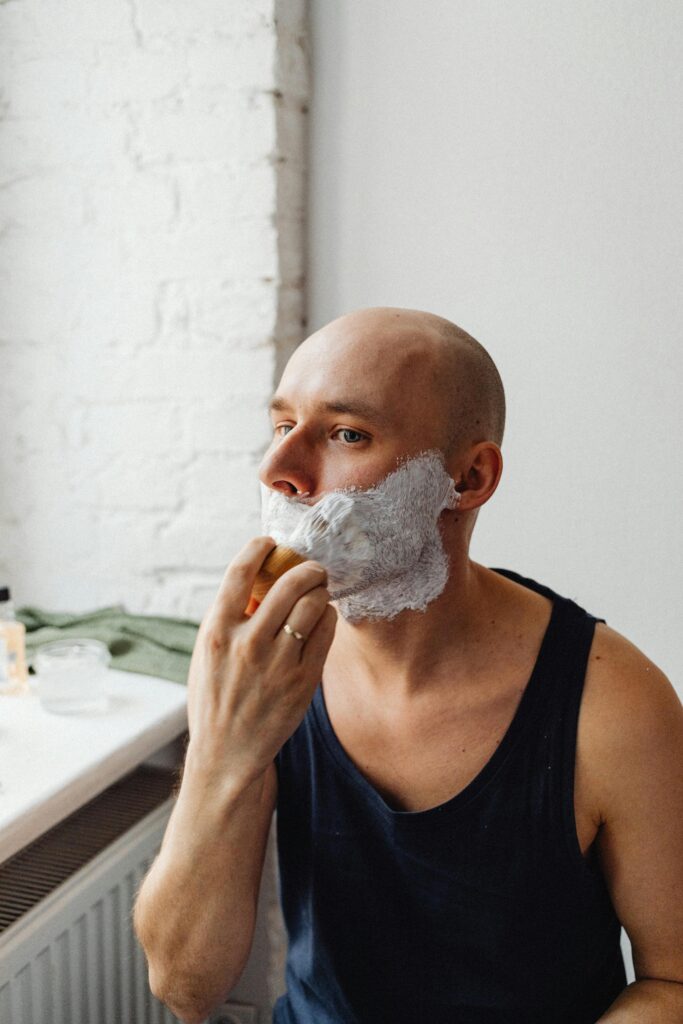
Yes, shaving can make men’s acne worse when it involves dirty razors, harsh products, or aggressive technique. The act of shaving itself does not cause acne, but it can irritate existing breakouts, transfer bacteria into the skin, and trigger conditions that look almost identical to acne.
Most men notice the connection without understanding it. You shave in the morning. By evening, fresh red bumps appear along the jaw and neck. The cycle repeats every few days. The cause is rarely the act of shaving itself but the combination of tools, products, and technique used during the process. Small changes to any of these three factors usually clear up shaving-related acne within two to three weeks.
This guide explains exactly does shaving make men’s acne worse, how to tell razor bumps apart from real acne, and the right way to shave at home without triggering more breakouts.
How Shaving Affects Acne-Prone Skin in Men?
Shaving affects acne-prone skin by removing the top layer of dead skin, disrupting the moisture barrier, and exposing pores to bacteria from the blade. This combination can inflame existing pimples and cause new breakouts within hours.
Acne-prone skin is already reactive. It produces excess oil, sheds dead cells unevenly, and inflames easily. When a razor passes over this skin, the blade cuts hair, scrapes the surface, and carries bacteria straight into open pores. Clinical research shows that only 12% of men say they never experience irritation after shaving, and around two-thirds of men expect some level of irritation every time they shave.
For men with mild to moderate acne, this usually means more redness, more pimples, and slower healing. For men with cystic or inflamed acne, shaving can rupture lesions and spread infection across the face.
Why Shaving Can Trigger or Worsen Breakouts?
Shaving worsens breakouts through four main mechanisms, including friction damage, bacterial transfer, increased oil production, and ingrown hairs. Each one affects acne-prone skin differently, and most men deal with several at the same time.
1. Friction and Skin Barrier Damage
Friction damage happens when the razor drags across the skin and creates microtears in the outermost layer. These tears weaken the moisture barrier and allow irritants and bacteria to reach deeper layers of the skin.
A 2024 clinical study using near-infrared spectroscopy imaging found that 57.6% of skin shaved with a multi-blade cartridge razor turned red right after shaving, compared to only 40.3% with a single-blade safety razor. The math is simple. More blades mean more friction. More friction means more inflammation, more redness, and more breakouts.
2. Bacteria Transfer From Blade to Skin
Old razors carry bacteria. Every shave drags bacteria across broken skin and into open pores. This is one of the most overlooked causes of jawline and neck breakouts in men. Additionally, a wet bathroom shelf is the worst place to store a razor. Moisture and warmth accelerate bacterial growth on the blade between shaves.
3. Increased Oil Production After Shaving
Shaving stimulates the skin and prompts sebaceous glands to produce more oil. For men with already oily skin, this extra sebum mixes with dead cells and bacteria inside pores and forms new pimples within 24 to 48 hours.
4. Ingrown Hairs and Inflamed Follicles
Ingrown hairs form when shaved hair grows back into the skin instead of out of it. This creates red, painful bumps that look like acne but are actually inflamed hair follicles. The jaw, chin, and neck are the most common sites because the hair grows in multiple directions.
Razor Bumps Vs Acne: How to Tell the Difference?
Razor bumps are caused by ingrown hairs after shaving. Acne is caused by clogged pores from oil and dead skin cells. The razor bumps vs acne distinction matters because each condition needs different treatment, and confusing the two often makes both worse.
Use this comparison to identify what is actually happening on your skin:
| Feature | Razor Bumps | Acne |
| Cause | Ingrown hair after shaving | Clogged pores, oil, and bacteria |
| Location | Beard, neck, jaw only | Anywhere on the face |
| Timing | Appears 1 to 3 days after shaving | Develops gradually, unrelated to shaving |
| Appearance | Red bump with hair visible inside | Whitehead, blackhead, or inflamed pimple |
| Treatment | Stop shaving, exfoliate, change technique | Cleanser, salicylic acid, benzoyl peroxide |
A simple home test confirms the difference. Stop shaving for five days. If the bumps fade, you are dealing with razor bumps. If they keep appearing, you are dealing with acne.
Moreover, razor burn and folliculitis are two related conditions that often get confused with each other. Razor burn looks like a red rash and shows up minutes after shaving. Folliculitis is an infected hair follicle that causes pus-filled bumps and usually needs medical treatment.
Shaving Irritation and Acne in Men With Curly or Coarse Hair
Men with curly or coarse hair are far more likely to develop shaving irritation and acne flare-ups because curved hair follicles cause shaved hairs to curl back into the skin. This condition is called pseudofolliculitis barbae, and it occurs most frequently in men of African descent, with lower but still significant rates in men of Asian descent and any man with tightly curled facial hair.
Three changes help reduce the risk:
- Shave only with the grain, never against it.
- Use a single-blade razor instead of a multi-blade cartridge.
- Avoid stretching the skin while shaving, which causes hairs to retract under the surface.
For men with severe pseudofolliculitis barbae, dermatologists often recommend pausing shaving entirely for two to four weeks to let trapped hairs surface and heal.
Should You Shave When You Have an Active Breakout?
Many men wonder does shaving make men’s acne worse when they already have an active breakout. It depends on the severity. Mild acne is safe to shave around with modifications. Moderate acne requires shaving carefully around active spots. Severe or cystic acne should not be shaved until the skin calms down.
Mild Acne or Occasional Pimples
You can shave with mild acne if you make a few adjustments. Use a sharp, clean blade. Apply minimal pressure. Take fewer passes over each area. Avoid passing the blade directly over any active pimple.
Moderate Acne With Multiple Active Spots
Shave around active spots, not over them. Use light, careful strokes and trim longer hairs with scissors first to reduce how much shaving you need to do. If a pimple bleeds or breaks open, stop shaving that area for the day.
Severe, Cystic, or Inflamed Acne
Skip shaving entirely until the skin calms down. Cystic and inflamed acne sit deep in the skin. Dragging a blade across it causes scarring, spreads bacteria, and slows healing. Use clippers or an electric trimmer to manage facial hair until the breakout settles.
The Right Way to Shave With Acne-Prone Skin at Home
The right shaving routine for acne-prone skin includes proper preparation, the correct razor, gentle technique, and post-shave care. Each step reduces friction, removes bacteria, and protects the skin barrier.
Preparing the Skin Before You Shave
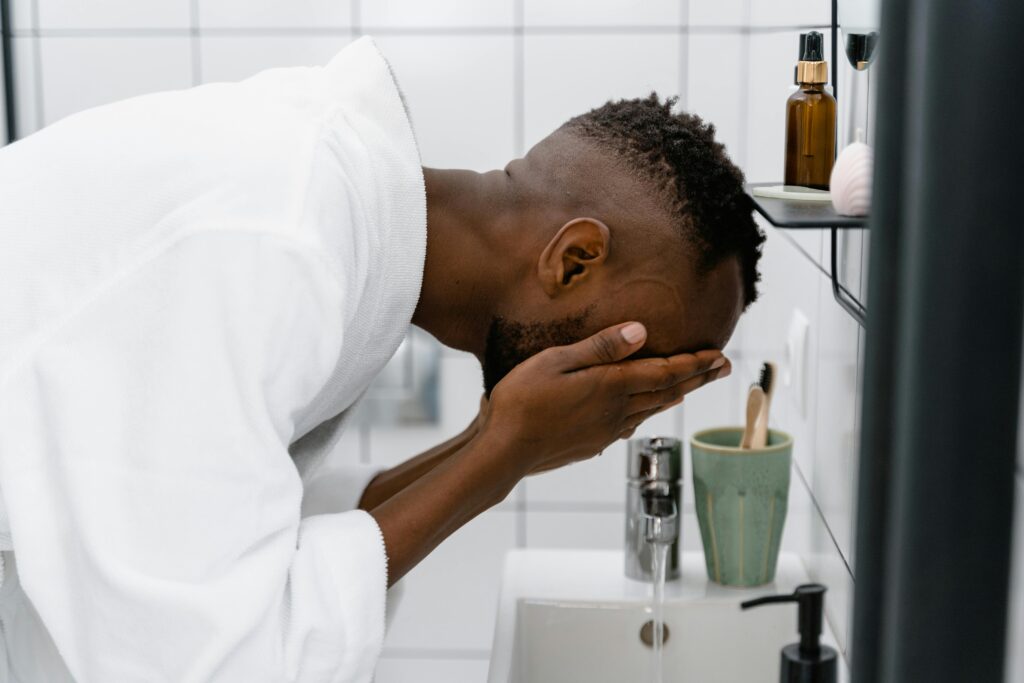
Wash your face with a gentle, non-comedogenic cleanser before shaving. Use warm water to soften facial hair and open pores. Splash the face for at least one minute or hold a warm, damp towel over the beard area for two to three minutes.
Light exfoliation once or twice a week with a salicylic acid cleanser removes dead cells that trap hairs and clog pores. Avoid harsh physical scrubs, which damage acne-prone skin further.
Choosing the Right Razor for Acne-Prone Skin
A single-blade safety razor is the best option for most men with acne-prone skin. It cuts hair cleanly with one pass and reduces the friction that triggers redness and breakouts. Multi-blade cartridges cut hair below the surface of the skin, which raises the risk of ingrown hairs.
Electric foil razors are a good middle ground for men with severe acne who cannot tolerate any blade contact. Foil razors cut at the surface and minimize pressure on pimples.
Shaving Cream and Gel That Works for Acne-Prone Skin
Use a non-comedogenic shaving cream or gel that does not clog pores. Look for these acne-friendly ingredients:
- Salicylic acid, which exfoliates inside the pore.
- Glycerin, which adds slip without clogging.
- Niacinamide, which calms inflammation.
- Tea tree oil, which has natural antibacterial properties.
Avoid these common irritants:
- Alcohol denat, which strips the skin barrier.
- Synthetic fragrance, which triggers reactive flare-ups.
- Coconut oil and other heavy oils, which clog pores on the face.
- Sodium lauryl sulfate, which dries and irritates.
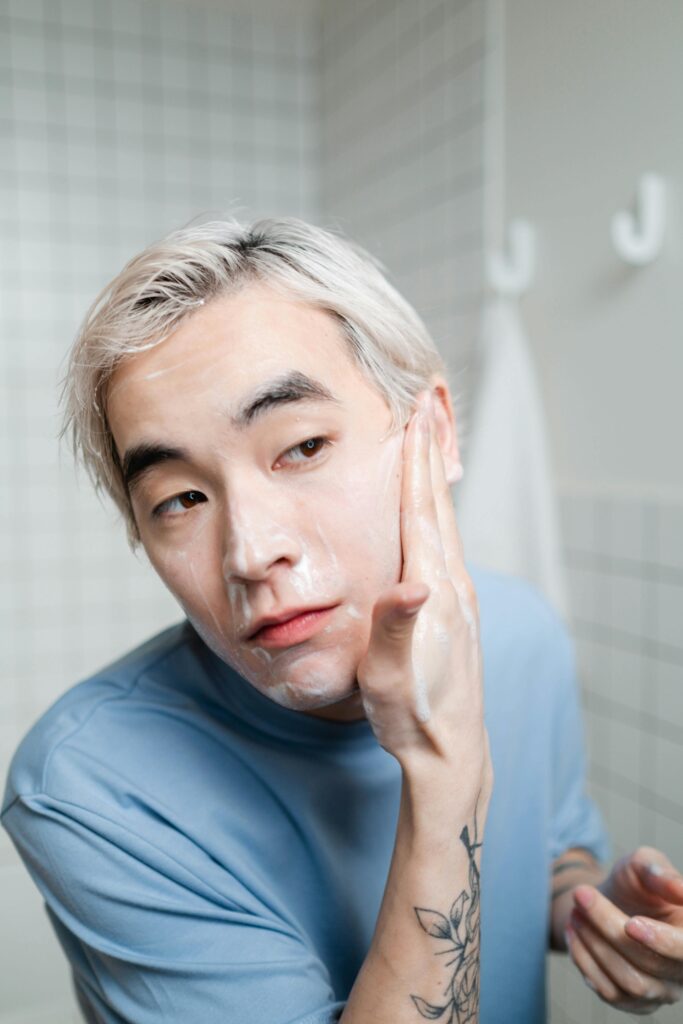
A gentle facial cleanser also works in place of shaving cream and is often safer for acne-prone skin.
Shaving Technique That Protects the Skin
Shave in the direction of hair growth. Use light pressure. Take fewer passes. Rinse the blade after every stroke to clear away hair, dead skin, and bacteria. Never pass the blade over an active pimple. If you must shave near one, lift the razor off the skin and resume on the other side.
Post Shave Care
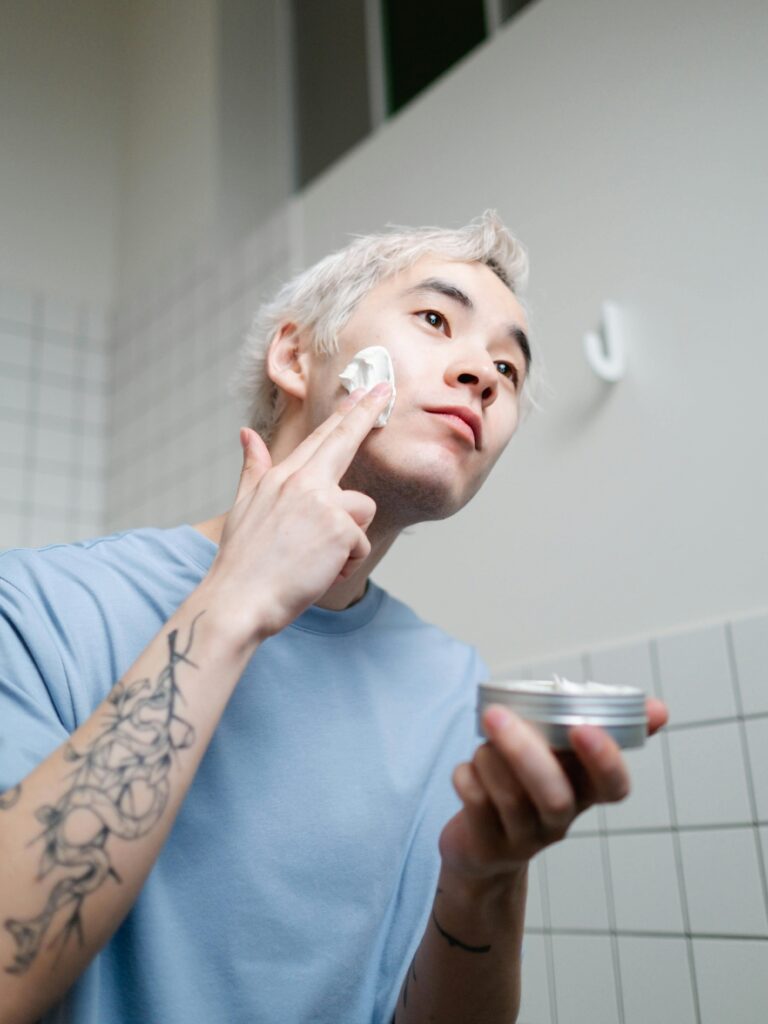
Rinse the face with cool water to close pores and reduce inflammation. Apply an alcohol free toner or aftershave with calming ingredients like aloe or witch hazel. Finish with a lightweight, non-comedogenic moisturizer that contains niacinamide or hyaluronic acid. Skip thick balms and traditional aftershave splashes. Both tend to either clog pores or strip moisture.
Razor Hygiene and Replacement
Replace razor blades every five to seven shaves. Rinse the razor with rubbing alcohol after each use. Store it in a dry place outside the bathroom, where humidity accelerates bacterial growth.
Sharing razors is a fast way to spread bacteria and worsen acne. Always use your own.
How to Calm Your Skin if Shaving Has Already Triggered a Breakout?
Stop shaving for three to five days, switch to a gentle cleanser, and apply spot treatments with salicylic acid or benzoyl peroxide. This gives the skin time to repair its barrier and clear active inflammation.
For ongoing recovery:
- Cleanse twice daily with a non-comedogenic, fragrance-free wash.
- Apply a thin layer of 2% salicylic acid or 2.5% benzoyl peroxide to active spots.
- Use a lightweight moisturizer with niacinamide morning and night.
- Apply broad-spectrum SPF 30 or higher every morning to prevent post-inflammatory dark marks.
Post-inflammatory hyperpigmentation often lingers after shaving-related breakouts heal. Ingredients like azelaic acid, niacinamide, and vitamin C help fade these marks over six to twelve weeks.
See a dermatologist if breakouts do not improve within four weeks of consistent home care, if cystic acne is forming regularly, or if scarring is starting to develop.
Final Thoughts
Shaving does not have to make men’s acne worse. The damage comes from old razors, harsh products, heavy pressure, and shaving over active breakouts. Fix those four things, and most shaving-related acne clears up on its own.
Build a routine around a clean blade, a non-comedogenic shaving cream, the direction of hair growth, and a calming post-shave moisturizer. Pause shaving when the skin is too inflamed. Your skin will respond within two to three weeks.
FAQs
Does shaving cause acne, or does it just make existing acne worse?
Shaving does not directly cause acne, but it can absolutely worsen existing breakouts. The blade spreads bacteria across broken skin, irritates the moisture barrier, and triggers folliculitis that mimics acne. True acne develops from clogged pores, excess oil, and hormonal shifts inside the body.
Should you shave over a pimple?
No, you should never shave directly over an active pimple. The blade can rupture the lesion, spread bacteria to surrounding pores, slow healing, and leave behind permanent scars or dark marks. Shave carefully around active spots instead, using light strokes and minimal blade pressure throughout.
Should you shave over a pimple?
No, you should never shave directly over an active pimple. The blade can rupture the lesion, spread bacteria to nearby pores, and leave permanent scars or dark marks. Shave carefully around active spots instead, using light strokes and minimal pressure on the skin.
Is an electric razor or a manual razor better for acne-prone skin?
It depends on the severity of your acne. Single-blade safety razors work best for mild to moderate breakouts because they cause less friction. Electric foil razors suit severe or cystic acne because they avoid direct blade contact with sensitive, inflamed pimples on the face.
How often should men with acne replace their razor blades?
Replace your razor blade every five to seven shaves. Old blades carry bacteria, lose their sharpness, and drag across the skin instead of cutting cleanly. Acne-prone skin reacts faster to dull, dirty blades, so frequent replacement is essential to prevent fresh breakouts and irritation.
Can shaving help acne by exfoliating the skin?
Shaving does remove some dead skin cells, but it is not a reliable acne treatment. The friction, bacterial risk, and barrier damage usually outweigh any exfoliating benefit for acne-prone skin. Use a salicylic acid cleanser instead for safer, more targeted, controlled exfoliation.