Acne patches work for men’s acne, but they only work for specific types of breakouts, and using them on the wrong kind of pimple will get you nowhere. Acne affects 9.4% of the global population and ranks among the top skin conditions worldwide. For men in particular, the combination of thicker skin and higher sebum output driven by testosterone means surface breakouts are common well into adulthood.
Acne patches are not a cure, and they are not a full skincare routine. They are a targeted spot treatment that works fast on the right blemish and does nothing on the wrong one. Used correctly, they are one of the simplest and most effective tools available for surface-level breakouts.
What Are Acne Patches?
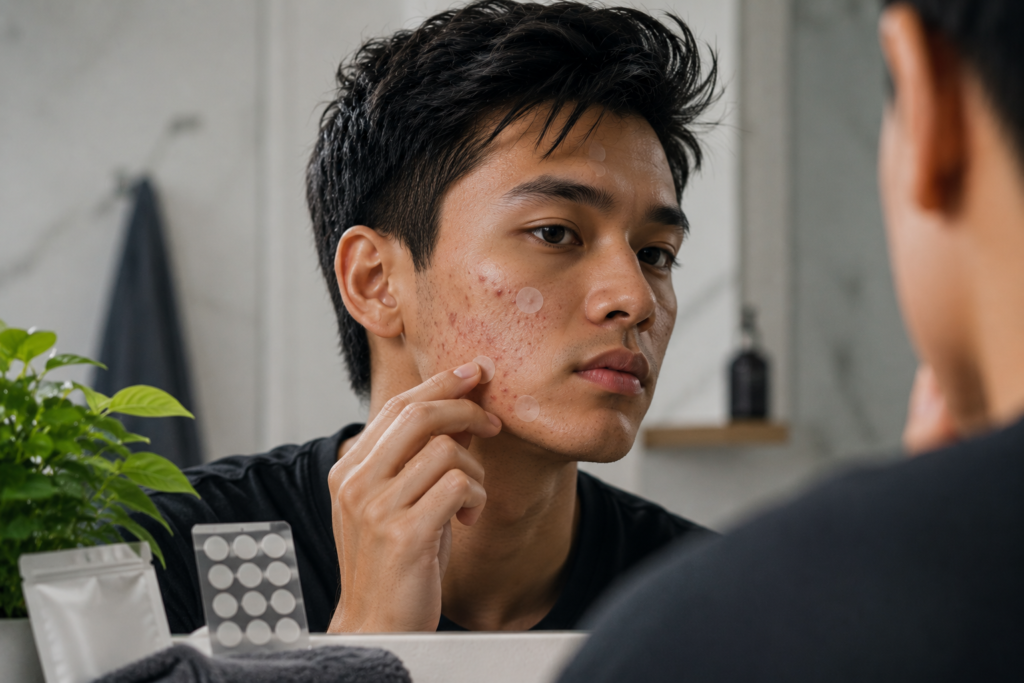
Acne patches are small adhesive stickers placed directly over a blemish. Most are made from hydrocolloid, a gel-like material originally developed for medical wound care that absorbs fluid, creates a moist healing environment, and forms a protective seal over the blemish.
There are two main types worth knowing:
- Hydrocolloid acne patches are the standard version. They absorb pus, oil, and fluid from the pimple, reduce redness, and flatten the blemish. They turn white as they work, which is how you know they are doing something. These are best for surface pimples and whiteheads.
- Microneedle patches use tiny dissolvable needles to push active ingredients beneath the outer skin layer, targeting early-stage or stubborn pimples that have not yet fully surfaced. They feel similar to pressing sandpaper gently against skin and are not painful to apply or remove.
How Do Acne Patches Work?
Acne patches work by creating a sealed, controlled environment directly over a pimple that draws out the impurities inside while protecting the area from everything outside. The hydrocolloid material acts like a sponge, pulling pus, oil, and bacteria out of the blemish and locking them into the patch.
The mechanism is simple, but the results depend on which type of patch you use and what you use it on.
The Absorption Process
When the patch makes contact with skin, the hydrocolloid starts pulling fluid out of the blemish right away. You can actually see it working, as the patch turns white as it fills up, which tells you it has done its job.
Clinical evidence from the NIH confirmed that hydrocolloid patches produced a significantly greater reduction in acne severity and inflammation over 3 to 7 days compared to standard skin treatments, with visible improvements in redness, oiliness, and sebum levels. Leave the patch on for 6 to 8 hours. Overnight is the sweet spot.
Active Ingredient Patches
Some patches include active ingredients on top of the hydrocolloid base. Salicylic acid breaks down the debris clogging the pore from the inside. Niacinamide calms the redness and inflammation surrounding the blemish. These medicated versions work better on inflamed or stubborn surface pimples and are a solid choice for men with oilier skin that tends to get more congested.
Microneedle Patches
Microneedle patches take a different approach. Instead of drawing fluid out, they push active ingredients in using tiny dissolvable needles that penetrate just past the outer skin layer. They are best used when you feel a pimple forming before it has fully surfaced. The process is painless, causes no lasting irritation, and takes seconds to apply.
Do Acne Patches Work on Men’s Acne?
Yes, acne patches work for surface-level breakouts. 42.5% of men aged 20 to 29 report having acne, which means adult male breakouts are far more common than most men realise. Knowing what patches work on and what they do not is what determines whether you get results or waste your time.
Patches are effective on:
- Whiteheads and pus-filled surface pimples
- Inflamed surface blemishes with visible redness
- Pimples that have been accidentally picked or disturbed
- Razor bumps that have surfaced and become inflamed
Patches will not help with:
- Deep cystic acne that forms below the surface
- Blackheads
- Hormonal or fungal acne
- Preventing future breakouts from forming
Most men who are disappointed by acne patches used them on the wrong type of blemish. Match the patch to the problem, and the results speak for themselves.
Steps to Use Acne Patches Correctly
Using an acne patch correctly takes less than two minutes. The process is simple, but a few small details determine whether the patch delivers results or just sits on your face doing nothing.
Follow these steps for the best results:
- Wash your face with a gentle cleanser and pat the skin completely dry
- Choose the right patch size for the blemish you are targeting
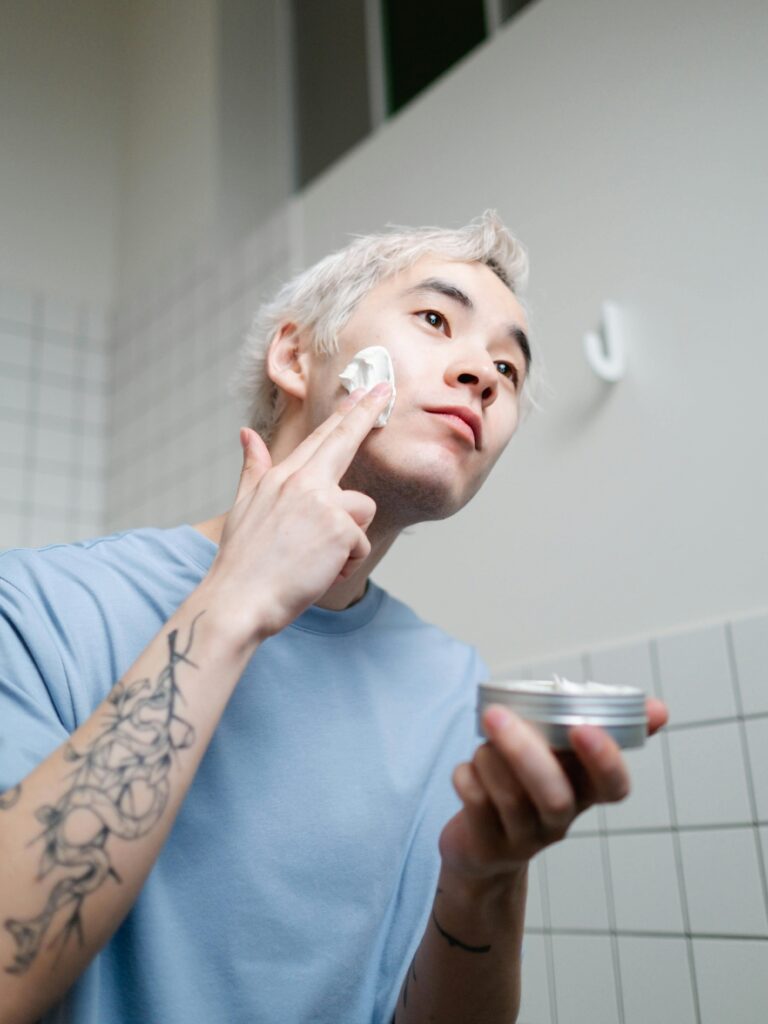
- Apply the patch directly over the pimple and press the edges firmly to create a full seal
- Leave it on for 6 to 8 hours, with overnight being the most effective window
- Remove it gently when the patch has turned white or opaque
- Cleanse the area lightly and follow with a moisturiser
A few things to avoid once you get started:
- Do not apply a patch over moisturiser or facial oil. It will not stick properly to a damp or oily surface.
- Do not use patches on deep cystic acne. The hydrocolloid cannot reach what is forming below the surface.
- Do not leave a patch on for more than 10 hours. It can dry out and irritate the skin around the blemish.
- Once the patch is on, leave it alone. Touching or adjusting it breaks the seal and reduces absorption.
Acne Patches Vs Other Spot Treatments
Most pimple patches review content online focuses on one thing: do they shrink a pimple overnight? The answer is yes, for surface-level breakouts. But knowing how they compare to other treatments helps you decide when to reach for a patch and when to use something else.
Each treatment serves a different purpose, and for men dealing with more than occasional surface breakouts, combining approaches often produces better results than relying on one product alone.
| Treatment | Best For | Speed | Ease of Use |
| Acne patches | Surface pimples and whiteheads | Fast, overnight | Very easy |
| Salicylic acid gel | Mild to moderate acne | Moderate | Easy |
| Benzoyl peroxide | Inflamed, bacteria-driven acne | Moderate | Easy |
| Adapalene (retinoid) | Preventing and treating acne long-term | Slow, weeks | Moderate |
| Dermatologist treatment | Cystic or severe acne | Variable | Requires appointment |
When to See a Dermatologist Instead?
Acne patches are a spot treatment, but not an acne management system. For men dealing with persistent, widespread, or deep breakouts, patches are not the right solution, and using them as one delays the treatment that actually helps.
Consider seeing a dermatologist if you are experiencing any of the following:
- Cystic or nodular acne that never comes to the surface head
- Breakouts covering large areas of the face, back, or chest consistently
- Acne that is leaving significant scarring or dark spots after healing
- No meaningful improvement from any available over-the-counter treatment after 8 to 12 weeks
Prescription treatments, including topical retinoids, oral antibiotics, and in some cases, isotretinoin, work at a level that no patch or gel can replicate for moderate to severe acne. Getting there sooner rather than later means less long-term damage to the skin.
The Bottom Line
Acne patches work. When used for the right type of breakout, they deliver visible results overnight and protect the skin from the self-inflicted damage that makes acne worse. They are not a substitute for a proper skincare routine, and they are not a solution for deep or persistent acne. But for surface-level breakouts, there are few spot treatments as simple, clean, and effective.
FAQs
Do acne patches work for men?
Yes, for surface-level breakouts. Acne patches are highly effective on whiteheads and inflamed surface pimples, which are the most common type in adult men. They absorb pus and oil, reduce redness, and protect the area overnight. They do not work on deep cystic acne.
How long should you leave an acne patch on?
Most acne patches should be left on for 6 to 8 hours, with overnight use producing the best results. Remove the patch when it turns white or opaque, which signals it has absorbed the fluid from the blemish. Avoid leaving patches on for more than 10 hours.
Can acne patches be used on cystic acne?
No. Acne patches work by absorbing fluid from surface-level blemishes and cannot penetrate deeply enough to reach cystic acne, which forms below the surface. For cystic breakouts, a dermatologist consultation and prescription treatment are significantly more effective options.
Do acne patches leave scars?
Acne patches do not cause scarring and actually reduce the risk of it by stopping you from picking or popping a pimple. Popping a pimple pushes bacteria deeper and causes inflammation that leads to scarring. Patches allow the skin to heal cleanly from the outside.
Can men use acne patches after shaving?
Yes, but apply the patch only once the skin has fully dried and any irritation from shaving has settled. Avoid placing a patch directly over freshly shaved, broken, or razor-burned skin. Applied to a stable surface pimple in the shaving zone, patches work effectively and protect the area.