Ice can reduce the redness, swelling, and pain of inflamed acne, but it does not treat the underlying cause. It works best as a fast-acting acne inflammation relief tool, not a standalone treatment. For men dealing with persistent or painful breakouts, understanding exactly what ice does and does not do makes all the difference between using it effectively and wasting time.
Acne is more common than most men realize. Around 17.5% of men globally deal with acne, with rates peaking between ages 16 and 24, and it does not always clear up on its own. A common question men ask when a painful pimple flares up is does ice help with men’s acne, and the answer is yes, but only when used correctly and with realistic expectations.
What Ice Does to a Pimple?
Ice reduces acne symptoms through a process called vasoconstriction. When cold contacts the skin, blood vessels narrow and tighten, which slows blood flow to the inflamed area and temporarily reduces swelling, redness, and pain. Cold therapy for acne has been used for over a century precisely because of this reliable anti-inflammatory response.
Here is what ice physically does when applied to a pimple:
- Constricts blood vessels, reducing visible swelling and inflammation
- Numbs nerve endings, providing temporary pain relief for cysts and nodules
- Reduces excess fluid buildup around the affected area
- Makes inflamed pimples look smaller and less red in the short term
What ice cannot do is equally important to understand. It does not kill acne-causing bacteria. It does not unclog pores. It does not address excess oil production or hormonal triggers. Ice manages the visible and physical symptoms of a breakout, not the root cause behind it.
Types of Men’s Acne Ice Can and Cannot Help With
Ice is not effective for every type of acne. It works specifically on inflammatory acne, which involves swelling, redness, and pain caused by the body’s immune response to clogged, bacteria-filled pores. If your goal is to reduce acne redness and swelling fast, ice is a practical first step as long as you are targeting the right type of breakout.
Ice helps with these types of acne:
- Cystic acne: Deep, painful lumps under the skin respond well to icing because the cold reduces the swelling and dulls the throbbing discomfort
- Nodules: Hard, inflamed bumps with no visible head benefit from ice since it reduces the surrounding inflammation
- Pustules: Red, pus-filled pimples that are swollen and tender can appear less inflamed after icing
- Papules: Small, raised, red bumps caused by inflammation respond to the anti-inflammatory effect of cold
Ice does not help with these types:
- Blackheads: These are non-inflammatory comedones caused by oxidized sebum in open pores. Cold does nothing to dissolve or remove them
- Whiteheads: Closed comedones with no inflammation mean there is no swelling for ice to reduce
Men who shave regularly may also find that ice for men’s acne works well on inflamed ingrown hairs and post-shave razor bumps, since both involve the same inflammatory response that cold temperatures can calm.
How to Use Ice on Acne Correctly?
Applying ice incorrectly can irritate the skin, cause cold burns, or even make breakouts worse. The method matters as much as the decision to use it.
Step-by-Step Method
Follow these steps for safe and effective ice application on acne:
- Wash your face with a gentle, non-comedogenic cleanser before applying ice. Applying cold to dirty skin can push bacteria deeper into pores
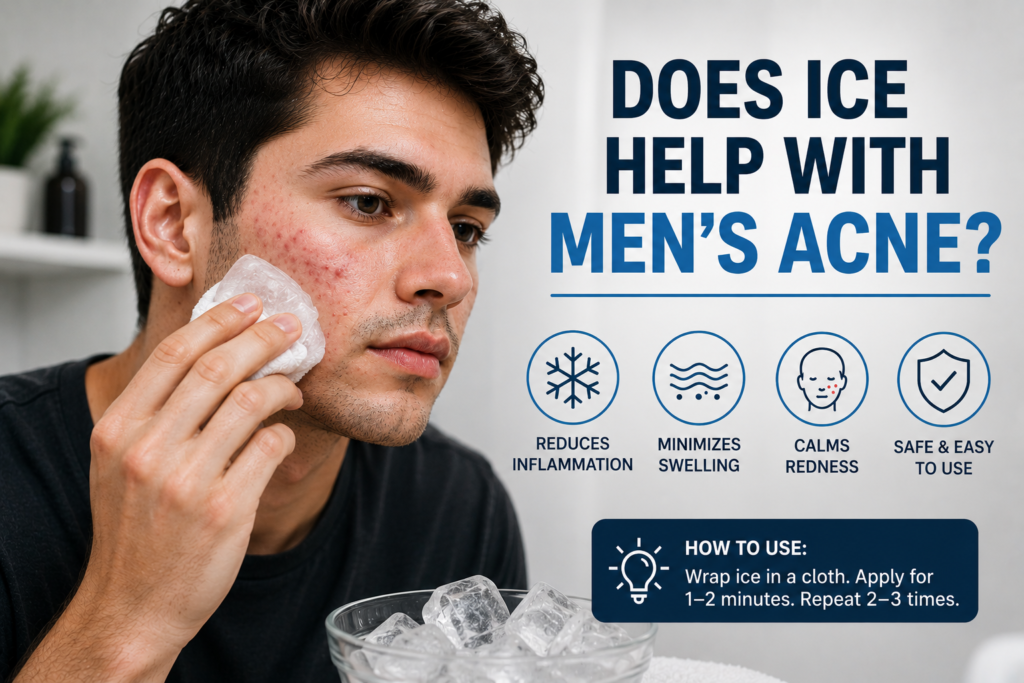
- Wrap one or two ice cubes in a clean, soft cloth or paper towel. Never apply ice directly to bare skin
- Press the wrapped ice gently onto the pimple for 1 to 2 minutes at a time
- Remove the ice and let your skin return to its normal temperature for a few minutes
- Repeat the process 2 to 3 times per session, up to twice daily on the same area
- Apply your acne treatment immediately after icing while the skin is still slightly cooled, since reduced inflammation can help active ingredients penetrate more effectively
Mistakes That Make Acne Worse
Avoid these common errors that can damage the skin barrier or worsen breakouts:
- Applying ice directly to bare skin can cause frostbite, cold burns, and tissue damage
- Holding ice on one spot for more than 2 to 3 minutes continuously
- Rubbing the ice cube across the skin rather than pressing it gently in one place
- Icing skin that has open wounds, popped pimples, or active skin conditions like rosacea
- Using ice as a substitute for a proper skincare routine rather than a complement to one
Ice works best when it is treated as a targeted tool for a specific purpose. Applied correctly and consistently, it can meaningfully reduce discomfort and visible inflammation without causing additional skin damage.
Pairing Ice With the Right Acne Treatments
Ice reduces inflammation fast, but it does not address what causes acne in the first place. Pairing it with the right treatments is what moves the needle from temporary relief to actual clearing. The following treatments target acne at its root rather than just masking the symptoms:
Benzoyl Peroxide
Benzoyl peroxide kills the bacteria responsible for inflamed breakouts and reduces excess sebum oxidation. It is available in 2.5% to 10% concentrations in cleansers and spot treatments. Applying it after icing, when the skin is calm and less inflamed, helps it absorb more effectively without triggering additional irritation.
Salicylic Acid
Salicylic acid is a beta-hydroxy acid that penetrates deep into pores and dissolves the dead skin cells and excess oil that cause blockages. It is particularly effective for blackheads and whiteheads, the two types of acne where ice provides no benefit at all.
Topical Retinoids
Retinoids speed up skin cell turnover, prevent clogged pores, and reduce inflammation over time. They are among the most evidence-backed long-term acne treatments available and work best when the skin barrier is not already compromised by active swelling.
Use ice as a prep step. Apply ice to reduce swelling, then follow with your chosen active ingredient while the skin is calm. This sequence can improve absorption and reduce the irritation that some actives cause on already-inflamed skin.
Final Note
Ice helps with men’s acne by reducing the inflammation, redness, and pain of active breakouts. It works on inflammatory types like cysts, nodules, and pustules, but does nothing for non-inflammatory acne like blackheads and whiteheads. As a form of cold therapy for acne, it is one of the most accessible and low-risk ways to manage symptoms fast when used with a cloth barrier and short application intervals.
The real value of ice is in how it fits into a broader routine. Icing before applying benzoyl peroxide, salicylic acid, or a retinoid can help those ingredients work more effectively on calmer, less-inflamed skin. It is not a cure, but it is a practical tool when used with the right expectations and the right treatments alongside it.
FAQs
Does ice help with men’s acne?
Yes. Ice reduces inflammation, redness, and pain in inflammatory breakouts like cysts, nodules, and pustules through vasoconstriction. It does not treat the root cause of acne but works effectively as part of a broader skincare routine.
How long should you hold ice on a pimple?
Hold ice on a pimple for 1 to 2 minutes at a time, then remove it and let skin return to normal temperature before reapplying. Longer than 2 to 3 minutes continuously increases the risk of cold burns without added benefit.
Can ice make acne worse?
Yes, if applied incorrectly. Placing ice directly on bare skin damages the skin barrier and worsens inflammation. Applying it to open wounds or popped pimples also increases irritation. Used properly with a cloth barrier and short intervals, it is safe.
Does ice help with acne scars?
Ice does not treat existing acne scars. It reduces active inflammation that can contribute to scarring over time, but cannot reverse scar tissue already formed. Retinoids, chemical peels, and dermatological procedures are more effective for treating acne scars.
Is it safe to ice skin right after shaving?
Not immediately. Shaving disrupts the skin barrier, and applying cold too soon increases irritation. Wait at least 15 to 20 minutes after shaving for the skin to settle, and always use a cloth barrier rather than applying ice directly.