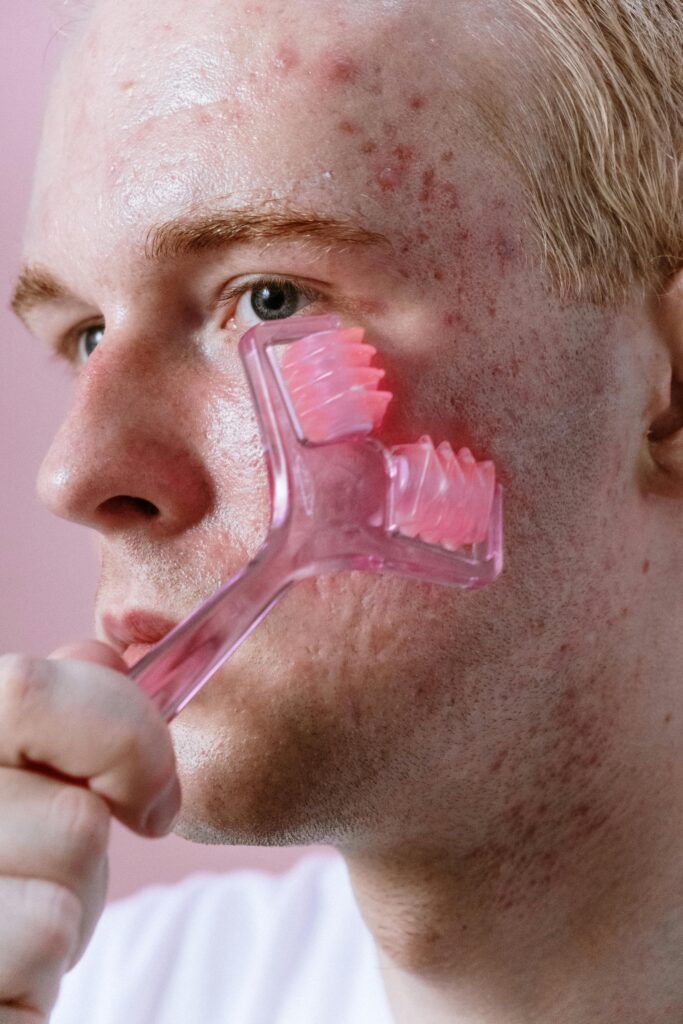
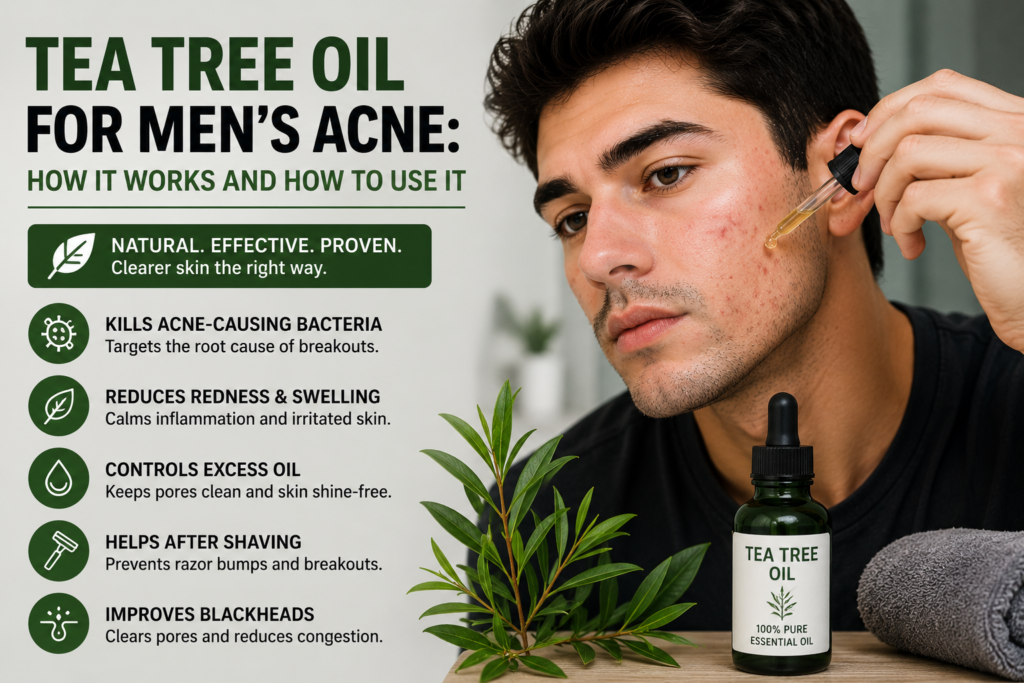
Tea tree oil is one of the most widely used natural spot treatments for acne, and the evidence behind it is stronger than most people realize. It kills acne-causing bacteria, reduces inflammation, and controls excess oil, making it a legitimate option for men dealing with mild to moderate breakouts.
What makes tea tree oil for men’s acne particularly relevant is that men’s skin naturally produces more sebum than women’s, has larger pores, and faces additional irritation from shaving. All three of these factors contribute to acne, and tea tree oil addresses each one directly.
This article covers how it works, how to use it correctly, and where its limits lie so you can build it into a routine that actually delivers results.
What Is Tea Tree Oil and Why Does It Work on Acne?
Tea tree oil is an essential oil extracted by steam distillation from the leaves of Melaleuca alternifolia, a tree native to Australia. It has been used as a natural antibacterial remedy for centuries, and modern research confirms that its effectiveness is not just anecdotal.
The active compound responsible for most of its acne-fighting power is terpinen-4-ol, which typically makes up around 40% of the oil’s composition. This compound works by penetrating the cell walls of acne-causing bacteria, disrupting their membranes, and shutting down their metabolic function. The result is that the bacteria responsible for inflamed breakouts are killed or significantly reduced.
Beyond its antibacterial properties, tea tree oil is also anti-inflammatory, which means it directly addresses two of the main drivers of acne: bacterial overgrowth and the inflammatory response that makes pimples red, swollen, and painful.
5 Major Benefits of Tea Tree Oil for Men’s Acne
Tea tree oil offers multiple advantages for acne-prone male skin, and each benefit targets a different part of the problem. Here is what it actually does when applied consistently.
1. It Kills Acne-Causing Bacteria
Cutibacterium acnes is the bacteria behind most inflamed breakouts. Tea tree oil penetrates its cell membrane and breaks down its defenses, effectively destroying it before it triggers a full inflammatory response. At a 5% concentration, it has been shown to reduce total acne lesion count by 43.64% compared to placebo, making it one of the most evidence-backed essential oils for acne available without a prescription.
This antibacterial action sets tea tree oil apart from many other natural spot treatments that only address surface symptoms. It goes deeper into the pore to eliminate the root cause of inflammatory acne rather than just reducing the appearance temporarily.
2. It Reduces Redness and Swelling
Tea tree oil suppresses the inflammatory signals that cause pimples to become red, raised, and painful. Applying a diluted solution directly to cysts, pustules, or papules can visibly reduce redness and swelling within a few days of consistent use.
This anti-inflammatory effect also makes it reliable after shaving, when skin is already sensitized and more prone to reactive breakouts. Applying it as part of a post-shave routine helps calm the skin before inflammation has a chance to develop into a full breakout.
3. It Controls Excess Oil Production
Men produce significantly more sebum than women due to higher testosterone levels, and excess oil is one of the primary triggers for clogged pores and acne. Tea tree oil has natural astringent properties that help regulate oil production on the skin’s surface, cutting down the greasy buildup that feeds acne-causing bacteria and blocks pores throughout the day.
For men with visibly oily skin, using a tea tree oil solution as part of a morning routine can reduce shine and keep pores cleaner between washes, without stripping the skin barrier the way harsh cleansers often do.
4. It Helps With Post-Shave Breakouts and Ingrown Hairs
Shaving regularly disrupts the skin barrier and creates micro-injuries that bacteria can quickly exploit. Its antimicrobial properties protect freshly shaved skin from bacterial colonization while its anti-inflammatory properties calm the irritation shaving leaves behind.
It is also effective on inflamed ingrown hairs, which share the same bacterial and inflammatory response as standard acne. Using it two to three times a week on acne-prone areas after shaving can meaningfully reduce the frequency of both razor bumps and post-shave pimples.
5. It Works on Blackheads Too
Unlike many spot treatments that only target inflamed acne, tea tree oil also addresses non-inflammatory acne. Its antibacterial action clears the bacterial buildup inside pores that contributes to blackhead formation, and its oil-regulating properties reduce the excess sebum that causes congestion in the first place.
Applying it consistently to the nose, chin, and forehead where blackheads are most common can produce a visible reduction in congestion over four to six weeks. It is one of the few natural spot treatment options that covers both active pimples and persistent blackheads without requiring separate products.
6 Simple Steps to Use Tea Tree Oil for Acne
Applying tea tree oil incorrectly is the most common reason men see poor results or skin reactions. Start with once daily in the evening and increase to twice daily after two weeks if your skin tolerates it well. Follow these steps every time for safe and consistent results.
Step 1: Patch Test First
Before applying tea tree oil to your face, dab a small amount of diluted solution on the inside of your arm. Wait 24 hours and check for redness, itching, or irritation. If none appear, it is safe to use on your face.
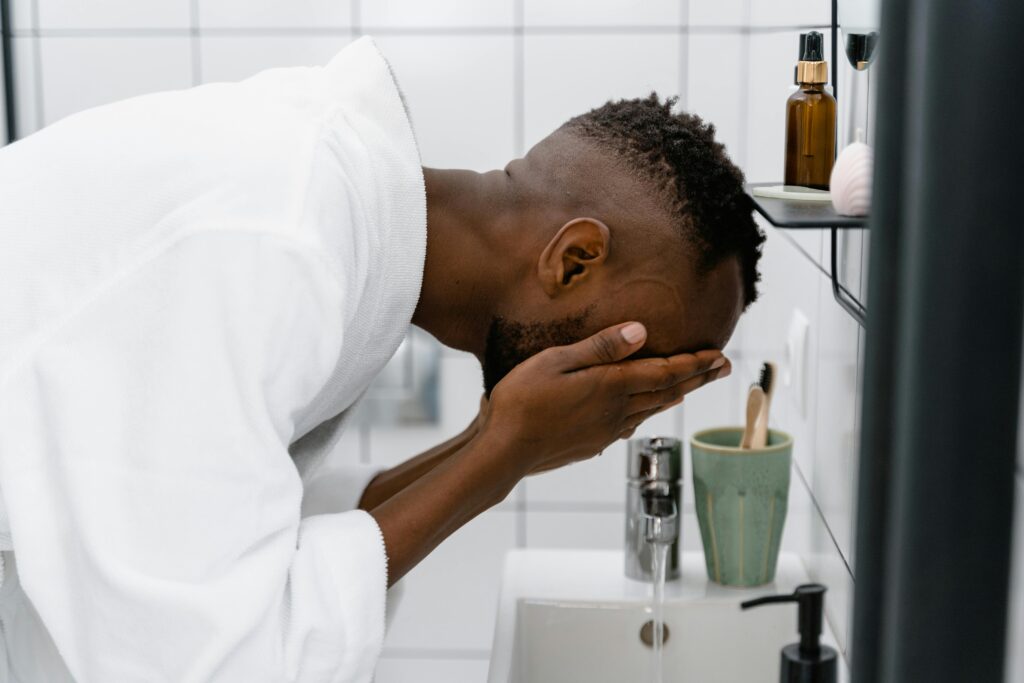
Step 2: Cleanse Your Face
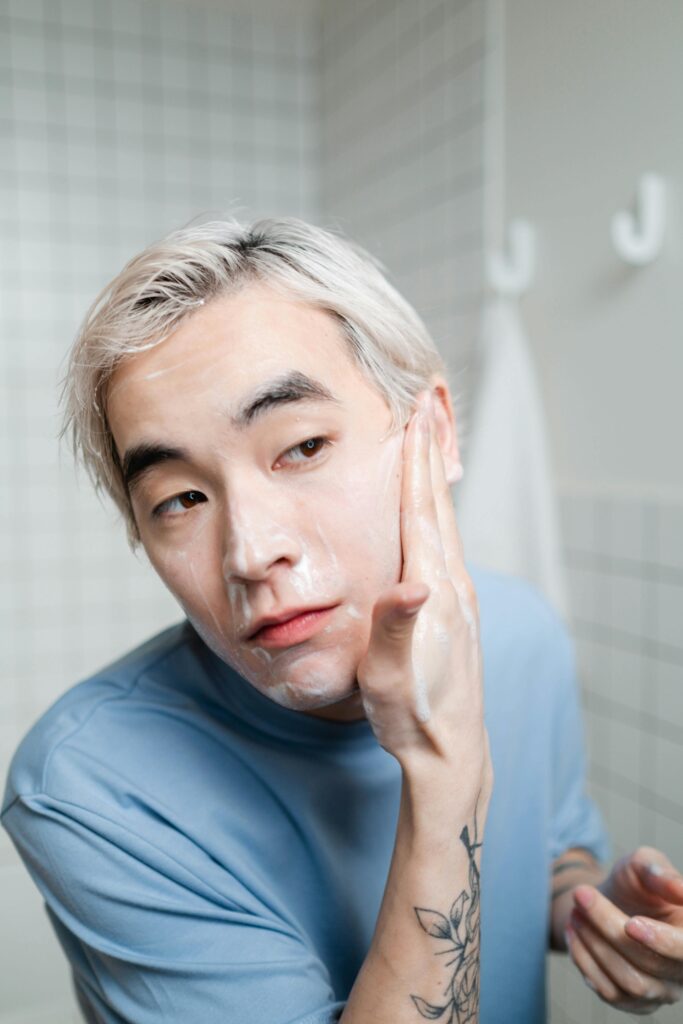
Wash your face with a gentle, non-comedogenic cleanser and pat it dry. Applying tea tree oil to clean skin improves absorption and prevents bacteria and dirt from being pushed deeper into pores.
Step 3: Dilute the Tea Tree Oil
Never apply tea tree oil directly to bare skin at full strength. Mix one part tea tree oil with nine parts of a carrier liquid to reach the effective 5% concentration.
Good options include:
- Water for a lightweight, non-greasy solution
- Jojoba oil for a skin-compatible carrier that does not clog pores
- An oil-free moisturizer for oily or acne-prone skin
- Witch hazel for added astringent and antibacterial benefit
Step 4: Apply to Affected Areas
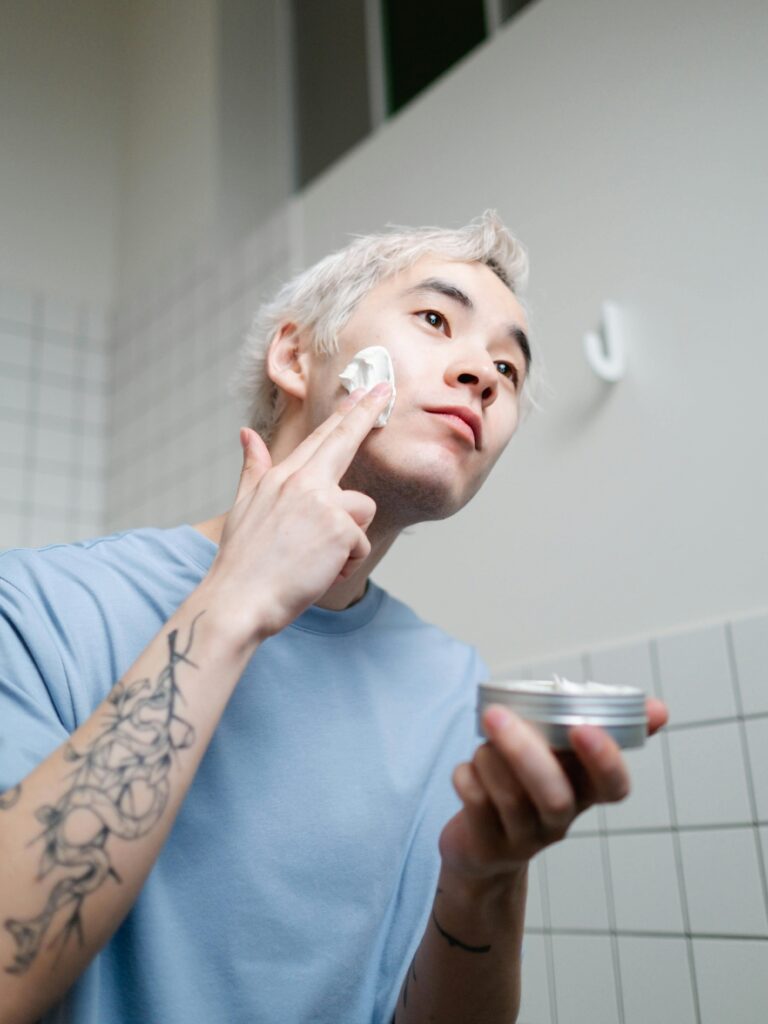
Use a clean cotton pad or cotton swab to apply the diluted solution. Dab it directly onto individual pimples for spot treatment, or spread it lightly across acne-prone areas for broader coverage. Avoid the eye area.
Step 5: Let It Absorb
Do not rinse it off. Allow the solution to absorb fully into the skin before moving to the next step. This gives the antibacterial and anti-inflammatory compounds enough time to work on the affected area.
Step 6: Moisturize
Follow with an oil-free, non-comedogenic moisturizer. Tea tree oil can dry out the skin with regular use, and skipping moisturizer undermines the skin barrier over time, which can actually worsen breakouts.
Tea Tree Oil vs Benzoyl Peroxide: Which Is Better for Men
Both are legitimate acne treatments, and the choice between them depends on your skin type and how quickly you need results.
Both 5% tea tree oil and 5% benzoyl peroxide reduce both inflamed and non-inflamed acne lesions at comparable rates. The key difference is onset time. Benzoyl peroxide works faster, but tea tree oil causes far fewer side effects, including dryness, peeling, and irritation.
Here is how to choose between them:
- Choose tea tree oil if your skin is sensitive, you react badly to benzoyl peroxide, or you are managing mild to moderate acne and do not mind a slower start
- Choose benzoyl peroxide if your acne is moderate to severe, you need faster visible results, or you are not dealing with dryness or sensitivity issues
The Bottom Line
Tea tree oil is one of the most evidence-backed natural treatments for acne available. It kills acne-causing bacteria, reduces inflammation, controls oil production, and addresses the post-shave breakouts that are specific to men’s grooming routines. At 5% concentration, it performs comparably to benzoyl peroxide with fewer side effects, making it a genuinely practical option for men with mild to moderate acne who want a less harsh alternative.
FAQs
Does tea tree oil for men’s acne actually work?
Yes. A 5% tea tree oil gel reduces both inflamed and non-inflamed acne lesions at rates comparable to benzoyl peroxide, with fewer side effects. It works best on mild to moderate acne with consistent use over four to six weeks.
How long does tea tree oil take to work on acne?
Tea tree oil typically takes four to six weeks of daily use to produce noticeable improvement. It works more slowly than benzoyl peroxide but causes significantly less dryness and irritation, making it better suited for men with sensitive skin.
Can I use tea tree oil on my face every day?
Yes. A properly diluted 5% solution is safe for daily use. Start with once daily in the evening and increase to twice daily after two weeks if no irritation occurs. Never apply undiluted tea tree oil directly to skin.
Does tea tree oil help with acne scars?
Tea tree oil reduces active inflammation that contributes to post-acne marks but does not treat existing scars. For hyperpigmentation, niacinamide and vitamin C are more effective. Deeper atrophic scarring requires professional dermatological treatment.
Is it safe to use tea tree oil after shaving?
Yes, but wait 10 to 15 minutes after shaving before applying. Freshly shaved skin has a compromised barrier, and applying tea tree oil too soon causes stinging. Once settled, it works well to prevent post-shave breakouts and calm ingrown hairs.