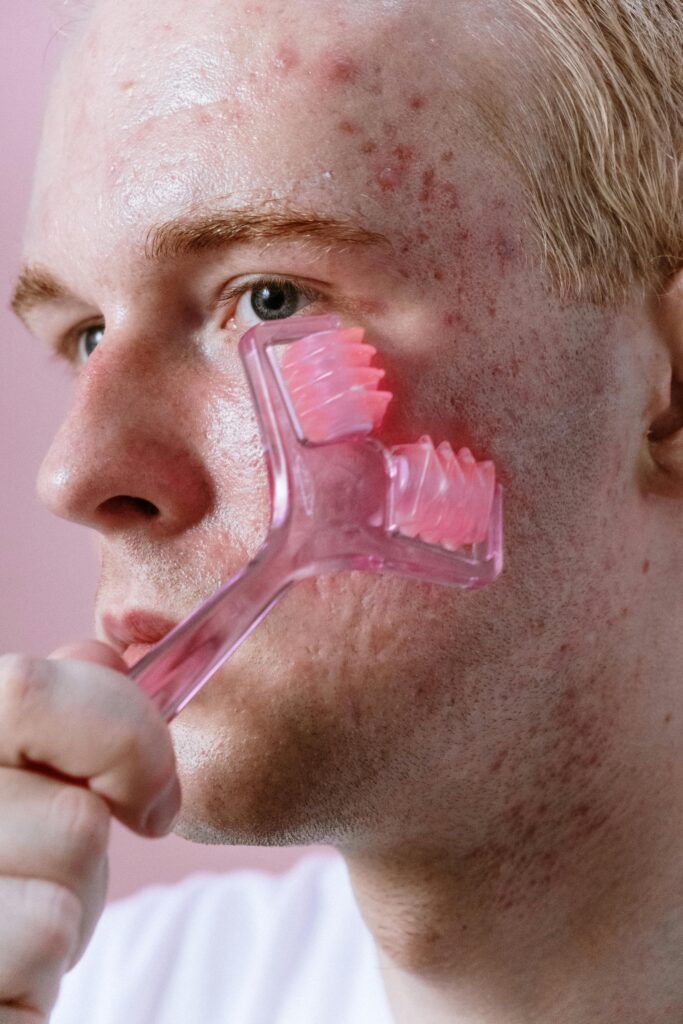
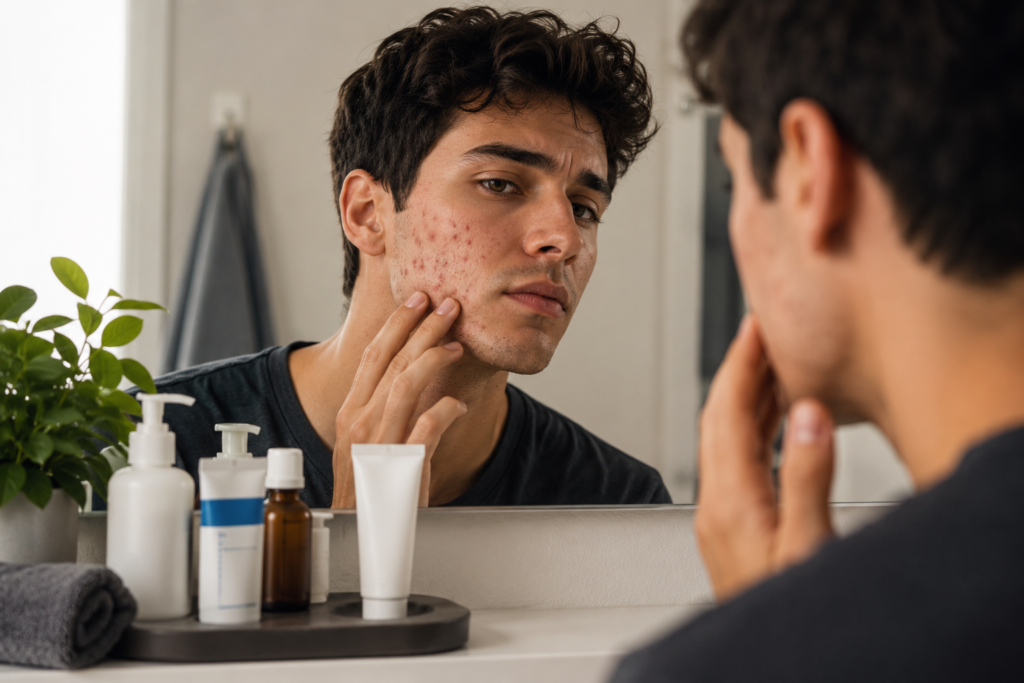
Acne does not stop at 19. Approximately 1 in 5 adults between 25 and 39 years of age is diagnosed with active acne, which means millions of men are dealing with breakouts well into their 30s and beyond. The problem is that most of them are reaching for the wrong products, using too many at once, or giving up before the treatment has had time to work.
Finding the best OTC acne treatment for men comes down to matching the right active ingredient to the right type of breakout. A product that clears blackheads will not do much for inflamed, bacterial pimples. Similarly, a spot treatment that works on the face may be useless on the back. This guide breaks down exactly which ingredient works for which type of acne, so you stop wasting money on products that were never right for your skin.
What to Look for in an OTC Acne Treatment for Men?
Not every product marketed as an acne treatment actually contains an active ingredient that fights acne. The American Academy of Dermatology endorses a short list of evidence-based ingredients that genuinely work.
Here are the four key active ingredients found in the best OTC acne treatment for men.
Benzoyl Peroxide
Benzoyl peroxide is the most widely recommended OTC acne treatment for inflamed, red, bacterial pimples. It kills acne-causing bacteria, reduces inflammation, and unclogs pores simultaneously, making it one of the most versatile active ingredients available without a prescription.
It is available in concentrations ranging from 2.5% to 10%. Start at 2.5% and work upward only if needed. Research shows benzoyl peroxide is equally effective at 2.5%, 5%, and 10%, but higher concentrations significantly increase the risk of skin irritation and dryness without delivering better results.
Key things to know:
- Works as a leave-on treatment, spot treatment, or wash-off cleanser
- Can bleach fabric, hair, and towels so use white towels and rinse thoroughly
- Best for inflamed pimples, not blackheads or whiteheads
- Pairs well with salicylic acid cleanser for a more complete routine
Salicylic Acid
Salicylic acid is a beta-hydroxy acid that works by dissolving the dead skin cells and oil that clog pores from the inside. Unlike benzoyl peroxide, it does not target bacteria. Its strength is in preventing and clearing non-inflammatory acne, such as blackheads and whiteheads.
Available OTC at concentrations of 0.5% to 2%, it is found in cleansers, toners, pads, and leave-on gels. For men with oily skin and consistent blackhead or whitehead activity, salicylic acid for men used as a daily cleanser or toner is often the most effective starting point.
Key things to know:
- Best for blackheads, whiteheads, and clogged pores
- Works well as a daily cleanser rather than a spot treatment
- Do not use alongside other exfoliating acids without monitoring for irritation
- Avoid if you have an aspirin allergy as salicylic acid is aspirin-based
Adapalene (Differin)
Adapalene is a retinoid, FDA-approved for OTC use at 0.1% since 2016. It works by normalizing skin cell turnover within the pore, preventing new breakouts before they form. Unlike benzoyl peroxide, it does not provide fast results. Expect 8 to 12 weeks before seeing meaningful improvement, but the long-term control it delivers is unmatched among OTC options.
The Mayo Clinic recommends starting with benzoyl peroxide or adapalene as a first step, noting some studies show they are more effective when used together.
Key things to know:
- Apply a pea-sized amount at night to the entire face, not just spots
- Use a non-comedogenic moisturizer to manage dryness during the adjustment period
- Avoid applying to broken, sunburned, or eczema-affected skin
- Does not work as a spot treatment; must be used consistently across the full area
Niacinamide
Niacinamide is not technically an acne medication, but it is one of the most effective supporting ingredients in any men’s acne routine. It reduces redness, regulates oil production, and calms inflammation without irritating, making it an ideal addition alongside stronger actives like benzoyl peroxide or adapalene.
It appears in serums, moisturizers, and toners at concentrations of 2% to 10%. It does not require a prescription and pairs safely with most other ingredients in your routine.
Best OTC Acne Treatment for Men by Acne Type
The single most common mistake men make with OTC acne treatment is choosing a product based on the brand or price rather than the type of acne they have. Here is how to match the treatment to the breakout.
For Blackheads and Whiteheads
Salicylic acid 1% to 2% is the best starting point. Use it as a daily cleanser or leave-on toner once or twice daily. Leave-on formulas work better than wash-off products for stubborn or widespread comedonal acne. If blackheads persist after 6 to 8 weeks, add adapalene nightly to address cell turnover at the root.
For Red, Inflamed Pimples
Benzoyl peroxide 2.5% to 5% is the most effective choice. Apply as a leave-on treatment after cleansing, or use a benzoyl peroxide wash daily in the shower for widespread breakouts. For mixed acne types, pair a salicylic acid cleanser in the morning with benzoyl peroxide at night to cover both bacteria and clogged pores.
For Stubborn, Recurring Breakouts
Adapalene applied nightly to the full affected area is the best long-term OTC solution. Results take 8 to 12 weeks but are more durable than benzoyl peroxide or salicylic acid alone. Many dermatologists recommend combining adapalene at night with a benzoyl peroxide wash in the morning for moderate, recurring acne.
For Post-Shave Breakouts and Razor Bumps
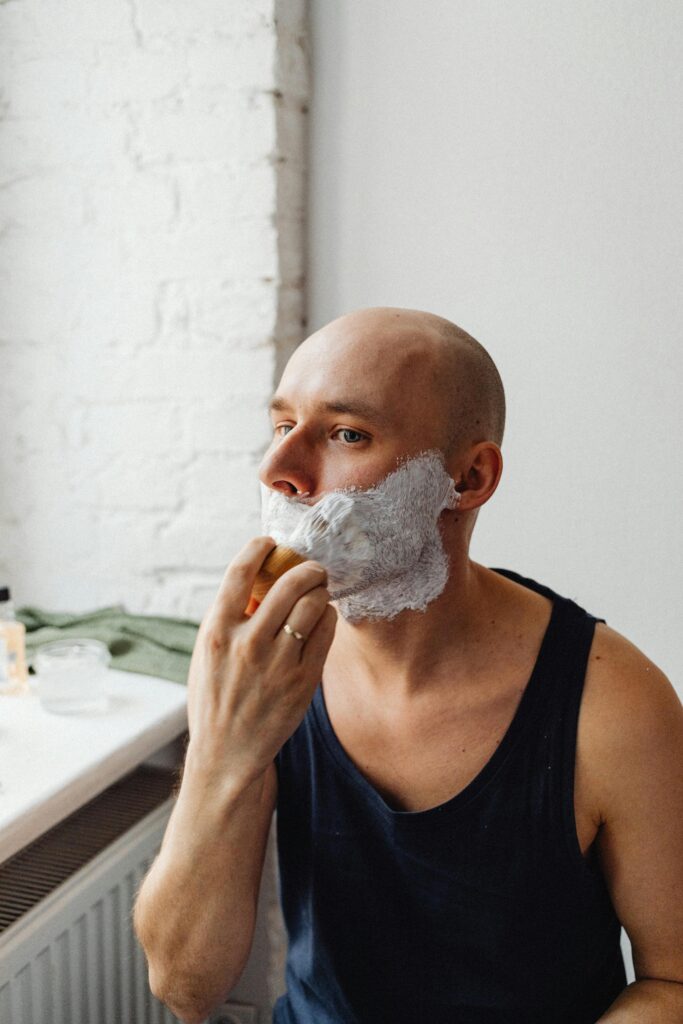
Post-shave breakouts look like acne but have a different cause. Shaving irritates follicles, and hairs curling back into the skin trigger inflammation that mimics pimples. Use a salicylic acid toner after shaving and a gentle benzoyl peroxide wash when irritation flares. Switch to a single-blade razor, shave with the grain, and use fragrance-free shaving products to reduce frequency.
For Back and Chest Acne
Apply a benzoyl peroxide body wash in the shower to the chest and back, leave it on for one to two minutes, then rinse. For hard-to-reach areas, salicylic acid sprays applied to dry skin after showering work well. Shower as soon as possible after workouts. Sweat trapped against skin by tight gym clothing is one of the most common triggers for body acne.
4 Steps to Build a Simple OTC Acne Routine for Men
The best OTC acne treatment for men is one that gets used consistently. A simple four-step routine built around the right active ingredients delivers better results than a complicated ten-step system that gets abandoned after two weeks.
Step 1 — Cleanse
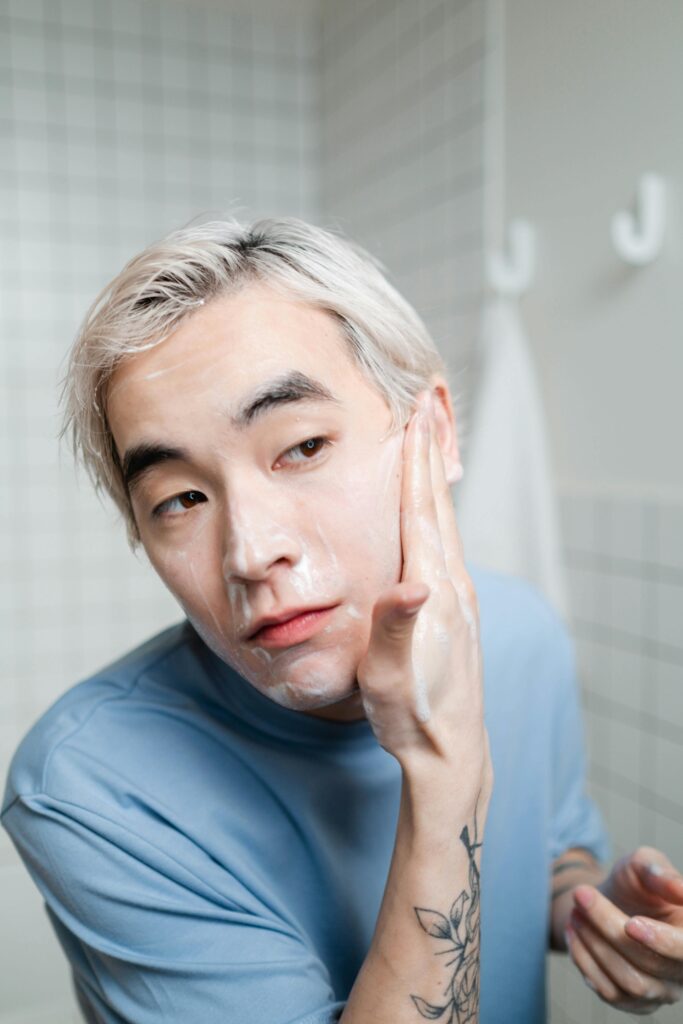
Use a gentle, fragrance-free, non-comedogenic cleanser morning and night. For oily skin or blackheads, choose one containing salicylic acid at 1% to 2%. For inflamed pimples, a benzoyl peroxide wash in the shower covers both cleansing and treatment in one step. Wash twice daily, maximum. Over-washing strips the skin barrier and triggers increased oil production.
Step 2 — Treat
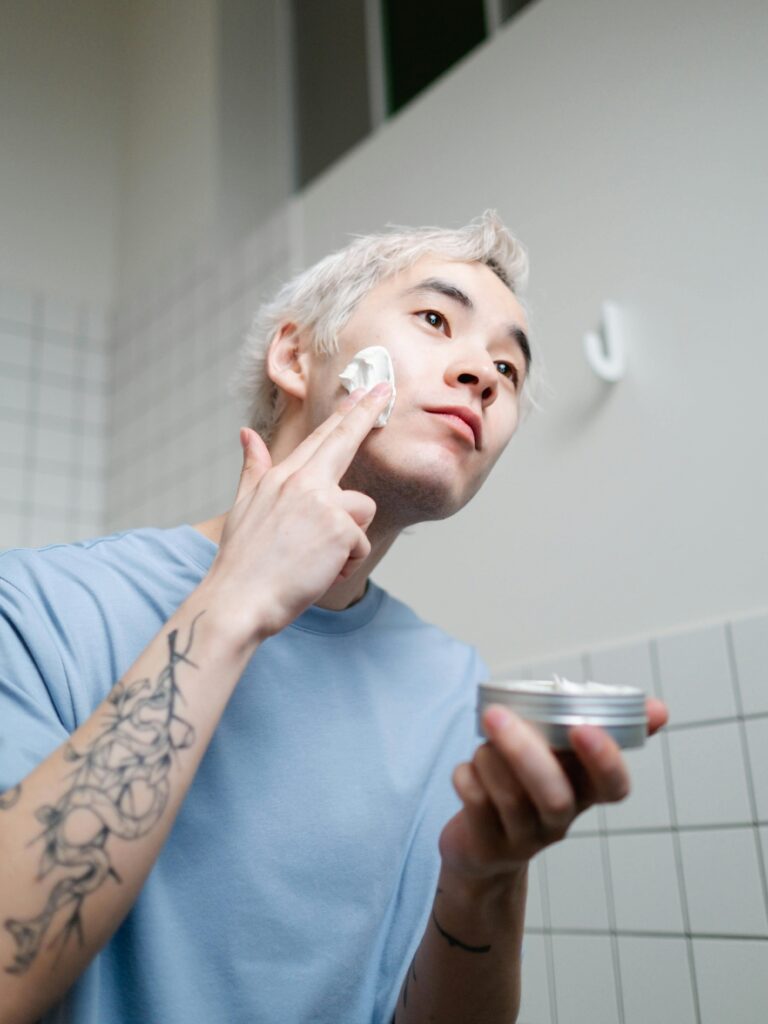
Apply your active ingredient to clean, dry skin after cleansing. Benzoyl peroxide works best as a leave-on treatment applied in the morning or at night. Adapalene is applied at night only. If using both, apply benzoyl peroxide in the morning and adapalene at night to avoid irritation from combining them simultaneously.
Step 3 — Moisturize
A non-comedogenic, oil-free moisturizer is not optional, even for oily skin. Active ingredients like benzoyl peroxide and adapalene dry out the skin, and a damaged barrier produces more oil and worsens acne over time. Choose a lightweight gel or lotion labeled oil-free and non-comedogenic and apply it after your treatment step.
Step 4 — Protect With SPF
OTC acne meds increase photosensitivity, making daily SPF essential. Benzoyl peroxide, salicylic acid, and adapalene all cause faster darkening of acne marks without sun protection. Use a non-comedogenic SPF 30 or higher every morning. Many oil-free moisturizers with built-in SPF combine steps 3 and 4 into one.
Common Mistakes Men Make With OTC Acne Treatments
Even the best over-the-counter acne meds fail when used incorrectly. These are the most common reasons OTC treatments stop working or never get started.
- Switching products too quickly: Most active ingredients need 6 to 8 weeks of consistent daily use before meaningful improvement appears. Switching after two weeks means starting over repeatedly without ever giving a product a real chance.
- Using too many actives at once: Layering benzoyl peroxide, salicylic acid, adapalene, and an exfoliating acid simultaneously overwhelms the skin barrier and causes irritation that makes acne look worse. Start with one or two actives and add others only after your skin adjusts.
- Skipping moisturizer: Active ingredients dry out the skin. A compromised skin barrier produces more oil and triggers more breakouts. Moisturizer is not the enemy of acne-prone skin.
- Over-washing: Washing the face more than twice daily strips natural oils, irritates the skin, and causes compensatory oil overproduction. More washing does not mean fewer pimples.
- Ignoring SPF: Unprotected sun exposure while using acne actives darkens post-acne marks and slows healing. Skipping sunscreen consistently adds weeks to the time it takes for skin to clear.
- Expecting overnight results: No OTC treatment eliminates acne in days. Managing expectations and committing to a consistent routine for at least 8 weeks is what actually produces clear skin.
When OTC Treatments Are Not Enough?
OTC acne treatment for men is effective for mild to moderate acne. There are clear situations where self-treating is not the right approach, and seeing a dermatologist will deliver faster, safer, and more lasting results.
See a dermatologist if:
- Acne is deep, painful, or cystic, producing large bumps that never come to a head
- Breakouts are leaving permanent or visible scarring
- Acne covers large areas of the face, back, chest, or shoulders simultaneously
- You have used OTC products consistently for 2 to 3 months with no meaningful improvement
- Acne is affecting your confidence, sleep, or daily quality of life
Prescription options, including topical retinoids, oral antibiotics, and isotretinoin, are significantly more powerful than anything available OTC and are often the most cost-effective path when mild treatments have already failed.
The Bottom Line
The best OTC acne treatment for men is not the strongest product on the shelf. It is the right ingredient for the right type of breakout, used consistently over enough time to work. Benzoyl peroxide clears inflamed, bacterial pimples. Salicylic acid for men unclogs pores and prevents blackheads. Adapalene controls recurring breakouts at the root. Niacinamide supports and calms the skin throughout.
Build a simple routine around one or two of these actives, add a non-comedogenic moisturizer, and protect with SPF every morning. Give the routine 8 weeks before evaluating whether it is working. That consistency, more than any single product, is what actually clears acne for good.
FAQs
What is the most effective OTC acne treatment for men?
It depends on the acne type. Benzoyl peroxide 2.5% to 5% is best for inflamed pimples. Salicylic acid 1% to 2% clears blackheads and whiteheads. Adapalene 0.1% is the strongest long-term OTC option for recurring breakouts and is widely recommended by dermatologists as a first-line treatment.
Is benzoyl peroxide or salicylic acid better for men’s acne?
Benzoyl peroxide targets red, inflamed, bacterial pimples. Salicylic acid works better for blackheads, whiteheads, and clogged pores. Many men benefit from using both together since they address different causes of acne simultaneously.
How long does OTC acne treatment take to work?
Most OTC treatments need 6 to 8 weeks of consistent daily use before noticeable improvement appears. Adapalene can take up to 12 weeks for full results. Switching products before this window closes is the most common reason treatments appear to fail.
Can men use adapalene without a prescription?
Yes. Adapalene 0.1% gel, sold as Differin, has been available without a prescription in the United States since 2016 following FDA approval. It is one of the most effective acne creams available OTC and dermatologist-recommended for mild to moderate adult acne.
What causes acne in adult men?
Adult male acne is primarily driven by higher androgen levels, stimulating excess oil production, combined with clogged pores and inflammation. Stress, diet, gym habits, shaving irritation, and pore-clogging hair or skin products along the jawline and hairline are common additional triggers.