Your skin is shedding dead cells right now, and far more than you would expect. Over a single year, the average person loses more than eight pounds of dead skin. Most of it falls away on its own, but plenty stays behind, mixing with oil and sweat to leave your face looking dull, rough, and prone to breakouts. Clearing that leftover layer is exactly what a good exfoliation routine for men does.
Men’s skin tends to be thicker and oilier than women’s, and daily shaving adds another layer of wear. That combination makes regular exfoliation one of the most useful, and most overlooked, steps in a man’s grooming routine. This guide explains what exfoliation does, how to do it without overdoing it, and how to match the routine to your skin type and shaving habits.
Why Men’s Skin Needs Exfoliation?
Exfoliation is the process of removing the dead cells that sit on the surface of your skin. Your body handles some of this naturally, but the process is not always efficient, and it slows down with age. In young, healthy skin, the renewal cycle takes around 28 days, but it can stretch past 40 days as you get older, which lets dead cells build up and leave the surface dull, congested, and rough.
Men have extra reasons to pay attention. Male skin is generally thicker and produces more oil, so more dead cells and debris get trapped in pores. Add regular shaving, and the surface collects even more buildup. Effective dead skin removal clears all of that away, and the benefits show up quickly:
- Smoother, brighter skin instead of a dull, tired look
- Fewer clogged pores, blackheads, and breakouts
- A closer, more comfortable shave with less drag
- Fewer ingrown hairs and razor bumps
- Better absorption of your moisturizer, serums, and other products
- Support for healthy cell turnover and a firmer look over time
Physical vs Chemical Exfoliation
There are two main ways to exfoliate, and knowing the difference helps you choose the right approach for your skin.
Physical Exfoliation
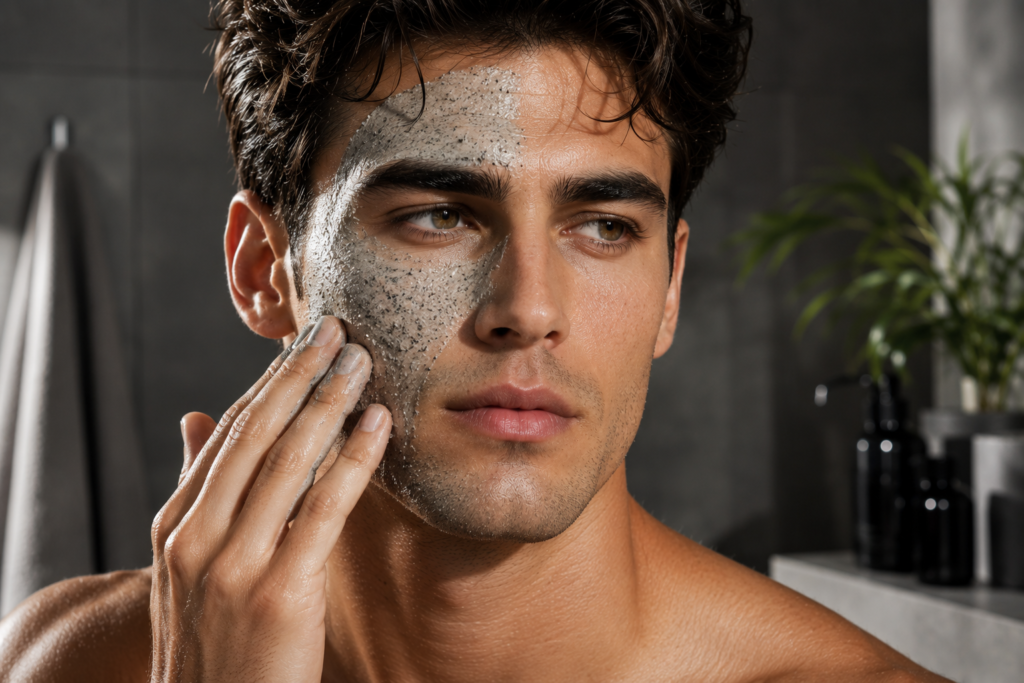
Physical exfoliation buffs dead cells off the surface through friction, using a product or a tool to manually polish the skin. The options fall into three main types:
- Scrubs use fine abrasive particles such as sugar, jojoba beads, or finely milled grains. They are quick, inexpensive, and give instant smoothness, which makes them an easy starting point for most men.
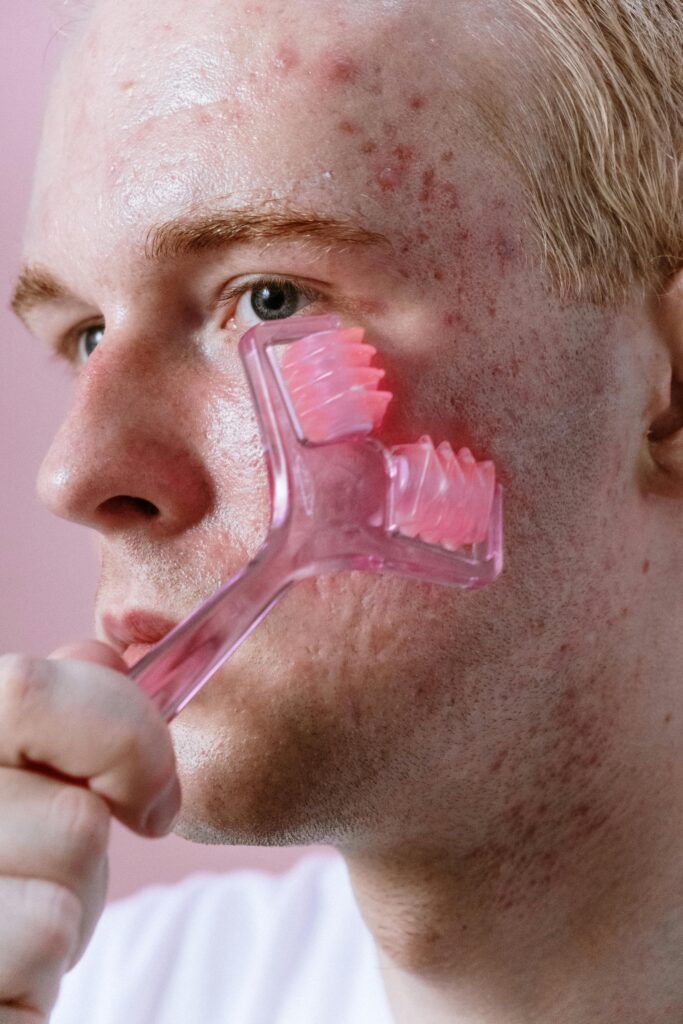
- Tools like facial brushes, konjac sponges, and washcloths lift away dead skin with gentle texture. They are reusable and suit thicker, oilier skin that can handle a slightly deeper clean.
- Exfoliating gloves or mitts cover more area in less time and double as shave prep, clearing the surface so the razor glides smoothly and hairs sit free.
Physical exfoliation delivers fast, visible results and fits easily into a shower routine, especially for men with resilient skin. But, coarse grains such as walnut shells or apricot pits can cause tiny tears in the skin. To stay safe, choose fine, rounded grains, use light pressure in small circular motions, and avoid scrubbing too hard or too often.
Used correctly, physical exfoliation gives quick, visible smoothness with very little effort. The key is restraint, since the goal is to polish the skin, not scrub it raw.
Chemical Exfoliation
Rather than scrubbing, this method uses acids or enzymes to dissolve the bonds that hold dead cells together, so they shed evenly and on their own. There are three main types worth knowing:
- AHAs (alpha hydroxy acids) such as glycolic, lactic, and mandelic acid are water-soluble and work on the surface. They are best for dullness, rough texture, and uneven tone. Glycolic is the most potent, lactic is gentler and adds hydration, and mandelic is mild enough for sensitive skin.
- BHAs (beta-hydroxy acids), mainly salicylic acid, are oil-soluble, so they get inside the pore to clear out oil and debris. This makes them the top choice for oily, acne-prone skin, blackheads, and congestion.
- Enzymes, derived from fruits like papaya and pineapple, are the gentlest option and a good entry point for reactive or easily irritated skin.
Because there is no scrubbing, chemical exfoliants treat the skin more evenly and reach places a scrub cannot, which is why they often suit sensitive and breakout-prone skin better.
However, acids can increase sun sensitivity, so daily sunscreen is essential and evening use is smart. Starting with a low concentration a couple of times a week prevents over-stripping. A quick patch test before your first full application is recommended.
How Often Should Men Exfoliate?
Frequency depends on your skin type and the method you use. The safest rule is to start slow and build up only if your skin stays calm.
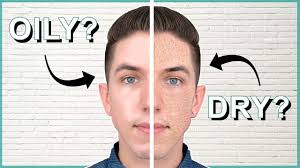
- Dry Skin: Once or twice a week
- Oily or Combination Skin: Two to three times a week
- Sensitive Skin: Once a week, with a gentle product
- Normal Skin: About twice a week
Men’s thicker skin can often handle slightly more, but more is not always better. If you are new to exfoliating, begin with once a week. Watch for signs you are overdoing it, redness, tightness, stinging, flaking, or sudden breakouts all mean it is time to scale back.
The Step-by-Step Exfoliation Routine for Men
Building an exfoliation routine men can actually stick to comes down to a few simple steps. Here is the process from start to finish.
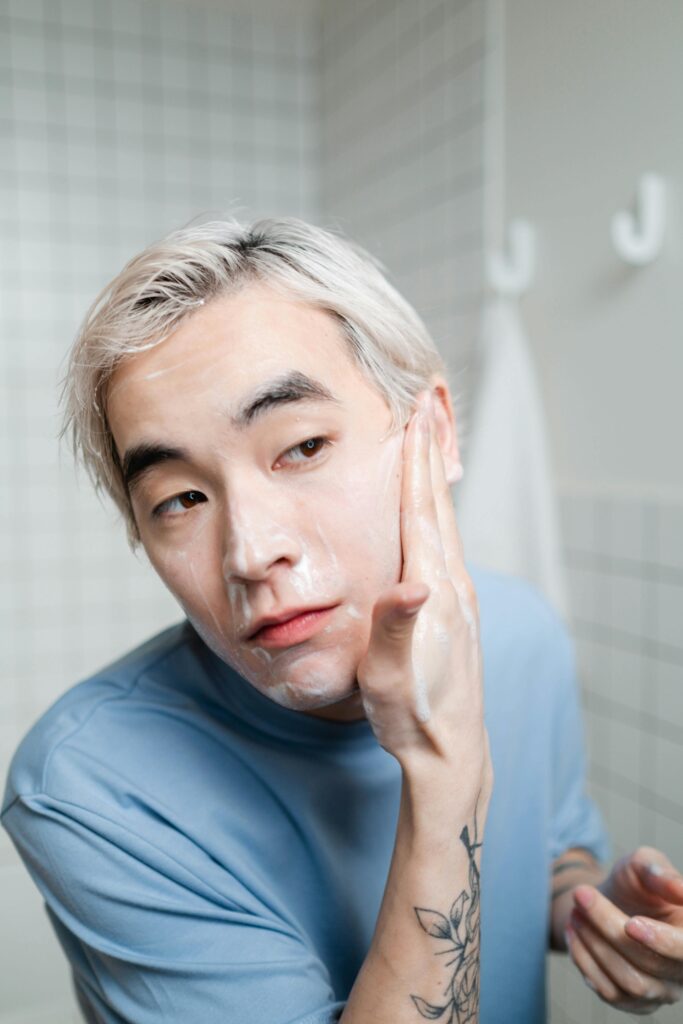
- Cleanse: Wash your face first to remove surface oil, sweat, and grime, so the exfoliant can work evenly.
- Exfoliate: How you do this depends on your product:
- Physical scrub or wash-off exfoliant: Massage gently in circular motions for about 30 seconds, then rinse with warm, not hot, water and pat dry.
- Leave-on chemical exfoliant (toner or serum): Apply to clean, dry skin and leave it on. There is no need to rinse.
- Rinse and pat dry: Rinse thoroughly with warm, not hot, water and pat your face dry with a clean towel.
- Moisturize. Exfoliating can leave skin slightly dry, so follow with a moisturizer to restore hydration.
- Protect with SPF. In the morning, finish with sunscreen. Exfoliated skin is more vulnerable to sun damage, which is also why many men prefer to exfoliate in the evening.
A complete exfoliation routine for men does not need to be complicated. These five steps, done a couple of times a week, are enough to keep your skin clear and smooth.
Exfoliating and Shaving: Getting the Timing Right
One of the most common grooming questions is whether to exfoliate before or after shaving. You should always do it before. Exfoliating first clears away dead skin and helps free trapped hairs, which leads to a closer shave and fewer ingrown hairs and razor bumps. Wait about 5-10 minutes after exfoliating before you pick up the razor, so your skin has time to settle.
Use physical exfoliation before a shave, and save chemical exfoliation for the days between shaves. Acids can leave freshly prepped skin more sensitive to the blade, so they are better used on non-shaving days. And avoid exfoliating immediately after you shave, since shaving is itself a mild form of exfoliation. Give your skin a day or two to recover first.
Exfoliating Beyond the Face
Your face is the priority, but it is not the only area that benefits.
Body
The skin on your body is tougher than your face, so it can handle more. A gentle scrub or exfoliating wash two to three times a week keeps arms, legs, and shoulders smooth.
Back and Chest
These areas are prone to sweat-related breakouts and clogged pores. A salicylic acid wash helps keep them clear, especially after workouts.
Scalp
If you have short hair or shave your head, exfoliating your scalp once a week reduces flaking and clogged follicles. A scalp scrub before shampooing does the job.
Choosing the Right Exfoliant for Your Skin Type
The best exfoliant is the one suited to your skin. Matching the method to how stubborn your dead skin removal needs are keeps the routine effective without irritation.
Oily and Acne-Prone Skin
Reach for salicylic acid, a BHA that clears oil and unclogs pores from the inside. Charcoal-based products also help absorb excess oil.
Dry and Sensitive Skin
Choose gentler options such as lactic acid or enzyme exfoliants, and keep frequency low. These dissolve dead cells without the harsh scrubbing that can trigger redness.
Normal and Combination Skin
Glycolic acid is a versatile choice, and most well-formulated physical or chemical exfoliants will work. Pay attention to how your skin responds and adjust as needed.
Whatever your type, avoid harsh scrubs with large grains, and do not pile exfoliation on top of strong actives like retinoids without spacing them out. A skin-type-matched exfoliation routine for men delivers results without the setbacks.
Common Exfoliation Mistakes to Avoid
Even a solid exfoliation routine men follow can backfire when these mistakes creep in:
- Over-exfoliating. More is not better. Too much strips the skin barrier and causes the very problems you are trying to fix.
- Scrubbing too hard. Pressure does not equal a deeper clean. Let the product do the work.
- Skipping moisturizer and SPF. Exfoliated skin is drier and more sun-sensitive, so both steps are essential.
- Layering too many actives. Mixing strong acids and retinoids at once invites irritation.
- Using a gritty body scrub on your face. Facial skin is more delicate and needs a finer product.
Signs of over-exfoliation include redness, burning, tightness, and unexpected breakouts. If you notice them, pause for a week and let your skin barrier recover.
Final Takeaway
A consistent exfoliation routine for men is one of the simplest ways to get visibly smoother, clearer, and healthier skin. Start slow, choose a method that suits your skin, exfoliate before you shave, and always follow with moisturizer and sunscreen. Done right, a couple of sessions a week is all it takes to see and feel the difference.
FAQs
How often should men exfoliate?
It depends on your skin type. Dry skin does well with once or twice a week, oily or combination skin can handle two to three times, and sensitive skin should stick to once a week. Start slow and increase only if your skin stays calm.
Should men exfoliate before or after shaving?
Before. Exfoliating first clears dead skin and frees trapped hairs for a closer shave with fewer ingrown hairs. Wait five to ten minutes before shaving, and avoid exfoliating right after, since shaving already exfoliates the skin.
Is chemical or physical exfoliation better for men?
Both work. Physical exfoliation suits oily, resilient skin and works well before a shave, while chemical exfoliation is gentler and better for sensitive or acne-prone skin. Many men use physical exfoliation before shaving and a mild acid between shaves.
Does exfoliating help with ingrown hairs and razor bumps?
Yes. Ingrown hairs form when dead skin blocks the follicle and traps the hair. Regular exfoliation clears that buildup, freeing the hair to grow out normally and reducing razor bumps over time.
What is the best exfoliation routine for men with sensitive skin?
Keep it gentle and simple. Use a mild chemical exfoliant such as lactic acid or an enzyme product once a week, skip harsh scrubs, and always follow with a fragrance-free moisturizer and sunscreen. Add frequency only if your skin tolerates it well.
Can you over-exfoliate, and what are the signs?
Yes, and it is common. Watch for redness, stinging, tightness, flaking, or sudden breakouts. If any appear, stop exfoliating for a week or two and focus on gentle cleansing and moisturizing until your skin recovers.