Benzoyl peroxide for men is one of the most effective over-the-counter acne treatments available, and for those dealing with persistent breakouts, it is often the first ingredient that actually works. It kills acne-causing bacteria, unclogs pores, and reduces inflammation without requiring a prescription.
Men’s skin behaves differently from women’s skin, which means the way you use benzoyl peroxide, the strength you choose, and where you apply it all matter more than most acne medication guides let on. Generic skincare advice rarely accounts for the biological differences that make male skin more prone to breakouts in the first place.
This article covers everything you need to know to use benzoyl peroxide correctly, from choosing the right concentration to applying it correctly, managing side effects, and knowing when to expect results.
What Is Benzoyl Peroxide and Why Do Men Need It?
Benzoyl peroxide for men is an FDA-approved topical ingredient that has been used to treat acne since the 1960s. It works by releasing oxygen into the pores, creating an environment where acne-causing bacteria cannot survive. Unlike antibiotics, bacteria cannot develop resistance to it, which makes it one of the most reliable long-term acne treatments available over the counter.
Men need it for a straightforward reason. Acne in men tends to be more severe, more persistent, and more likely to leave lasting marks. Benzoyl peroxide addresses the root cause directly rather than just treating surface symptoms, which is exactly what most men need from an acne medication.
3 Reasons Benzoyl Peroxide Works Differently on Men’s Skin
Men’s skin is not just a larger version of women’s skin. It has distinct biological characteristics that affect how ingredients penetrate, how quickly irritation develops, and how long treatment takes to show results. Understanding these differences helps you use benzoyl peroxide more effectively.
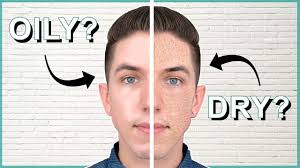
1. Men Have Thicker and Oilier Skin
Men’s skin is approximately 25% thicker than women’s skin due to higher collagen density and testosterone-driven structural differences. This means active ingredients take longer to penetrate and need more consistent application to produce results.
Men also produce significantly more sebum than women across all facial sites and age groups, with levels on the cheek nearly double in men compared to women, according to published research on male and female skin differences. That excess oil creates larger pores, more congestion, and a higher tendency toward breakouts, all of which benzoyl peroxide is specifically designed to address.
2. Testosterone and Acne Production
Testosterone converts to dihydrotestosterone, or DHT, inside the skin. DHT directly stimulates sebaceous glands to produce more oil, which increases the likelihood of clogged pores and bacterial growth.
This is why male acne is often more concentrated, more inflamed, and more resistant to basic cleansing routines. The hormonal driver does not switch off after adolescence either. Many men continue to experience breakouts well into their 30s and 40s as a direct result of ongoing sebum production.
3. Shaving and Skin Barrier Damage
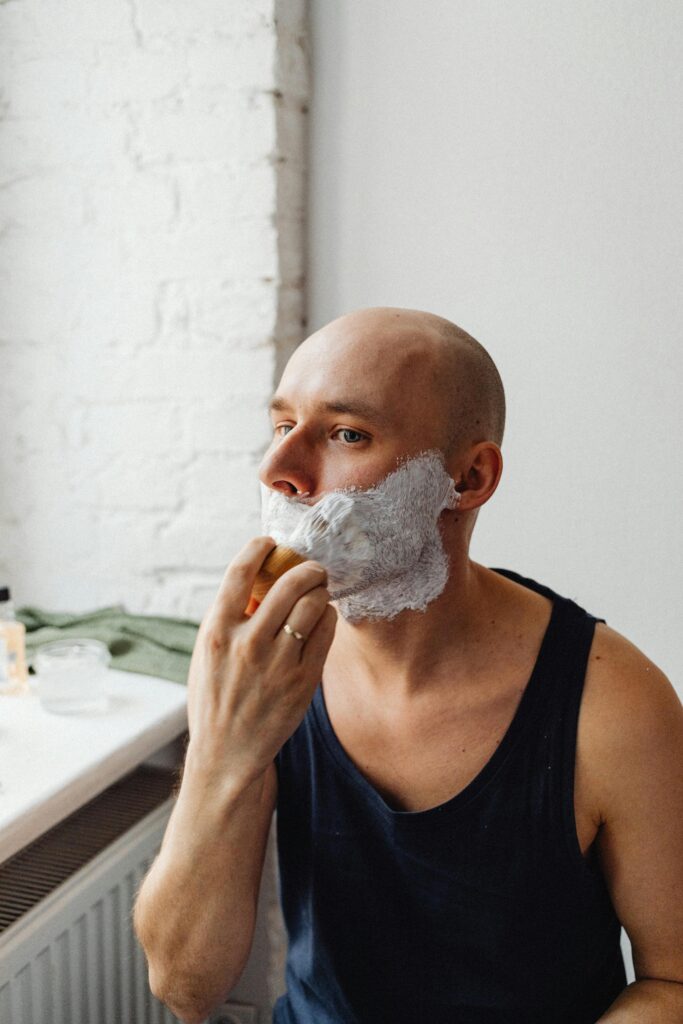
Shaving removes the top layer of skin, disrupting the barrier function that normally keeps bacteria and irritants out. For men who shave regularly, this creates a cycle where the skin is perpetually compromised, making it easier for acne-causing bacteria to penetrate and harder for the skin to recover.
Benzoyl peroxide helps break this cycle by targeting the bacteria before they have a chance to settle into freshly shaved skin. This makes it particularly valuable for men who experience breakouts along the jaw, neck, and chin.
What Strength Should Men Start With for BP Treatment Acne?
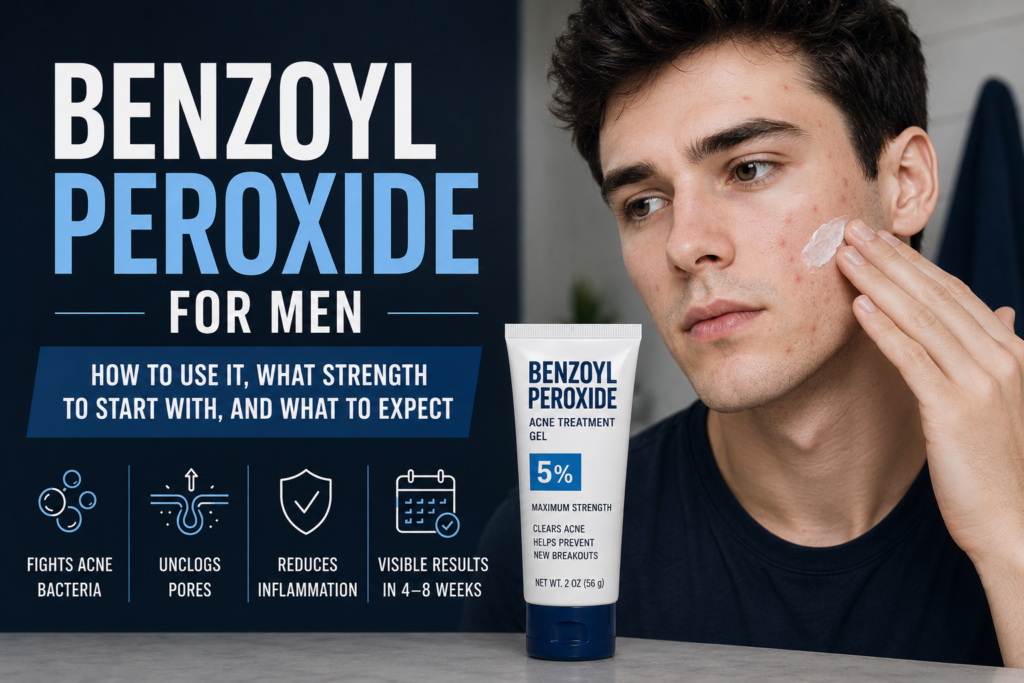
Benzoyl peroxide is available in concentrations ranging from 2.5% to 10%. Many men assume that higher means faster or better, but that is not how it works. Starting at the wrong strength is one of the most common reasons men give up on BP treatment for acne before it has a chance to work.
2.5% for Beginners and Sensitive Skin
The 2.5% concentration is the right starting point for most men, including those who think their skin is tough enough to handle something stronger. It delivers effective antibacterial action with the least risk of irritation, dryness, or peeling.
This matters because an irritated skin barrier actually worsens acne over time. Start here, use it consistently for four to six weeks, and assess your results before moving up.
5% for Moderate Acne
The 5% concentration works well for men with established acne who have already tried a lower strength without seeing adequate improvement. It is a strong middle ground that covers most moderate acne cases without the aggressive drying effects of the highest concentration.
Most men with oily or combination skin will find this concentration effective without needing to go higher.
10% for Stubborn or Body Acne
The 10% concentration is typically reserved for persistent, treatment-resistant acne or body acne on the chest and back. Research shows that benzoyl peroxide is equally effective at 2.5%, 5%, and 10% for bacterial reduction, but higher concentrations cause significantly more irritation.
If you are reaching for 10%, do so deliberately and moisturize consistently to manage the drying effects.
How to Use Benzoyl Peroxide Correctly?
Using benzoyl peroxide correctly is just as important as choosing the right strength. Applying too much, layering it incorrectly, or skipping moisturizer will undermine your results and make the experience more uncomfortable than it needs to be.
Step-by-Step Routine for the Face
Keep the routine simple and consistent. Here is exactly how to apply it:
- Wash your face with a gentle, non-medicated cleanser and pat dry
- Wait two to three minutes for the skin to dry completely before applying
- Apply a thin layer of benzoyl peroxide to the affected areas only
- Follow immediately with a non-comedogenic moisturizer
- Apply sunscreen in the morning since benzoyl peroxide increases sun sensitivity
Start with a once-daily application. If your skin tolerates it well after two weeks, move to twice daily. Never apply more than a thin layer. More product does not mean faster results.
Using It in the Beard and Shaving Area
Using benzoyl peroxide around a beard or in areas you shave regularly requires extra care. The skin beneath facial hair is already more prone to trapped bacteria, ingrown hairs, and follicle inflammation. A benzoyl peroxide wash works particularly well here since it contacts the skin during cleansing and rinses off before it can excessively dry the area.
A few things to keep in mind when using it around facial hair:
- Use a wash formulation rather than a leave-on gel in heavily bearded areas
- Apply after washing the beard thoroughly so the product reaches the skin
- Avoid applying directly before shaving since freshly shaved skin is already compromised
- Moisturize after every use to counteract dryness beneath the beard
Using It on the Chest and Back
Body acne is significantly more common in men than in women due to higher sebum production and sweat-prone skin. A benzoyl peroxide body wash is the most practical format for chest and back application.
Apply it to damp skin, let it sit for one to two minutes before rinsing, and use it consistently rather than just when breakouts appear. Consistency is what keeps bacterial populations low over time.
Ingredients to Pair With Benzoyl Peroxide and What to Avoid
Benzoyl peroxide works well alongside certain ingredients and conflicts badly with others. Knowing which is which will save you from unnecessary irritation and wasted product.
Ingredients that work well alongside benzoyl peroxide:
- Niacinamide: Helps regulate oil production and reduces redness caused by benzoyl peroxide
- Hyaluronic Acid: Restores moisture without clogging pores, essential when using benzoyl peroxide daily
- Retinol: Effective for long-term skin renewal, but should be used at a separate time of day to avoid over-irritation
- Azelaic Acid: Complements benzoyl peroxide for men dealing with post-acne marks alongside active breakouts
Ingredients to avoid using at the same time:
- Vitamin C: Benzoyl peroxide oxidizes and deactivates vitamin C, making both ingredients less effective
- Glycolic Acid or Tretinoin: Combining these with benzoyl peroxide in the same routine without dermatologist guidance causes aggressive over-exfoliation
- Alcohol-based Toners: Using these on the same areas as benzoyl peroxide will strip the skin barrier and worsen irritation
Common Side Effects of Using Benzoyl Peroxide
Benzoyl peroxide is well tolerated by most men, but it does come with side effects, particularly in the first few weeks of use. Knowing what to expect prevents you from abandoning a treatment that is actually working.
Common side effects include:
- Dryness and flaking in the treated areas
- Mild redness or irritation, especially in the first week
- Increased skin sensitivity to sunlight
- A temporary worsening of breakouts in the first two weeks as the skin adjusts
One practical warning to keep in mind is that benzoyl peroxide bleaches fabric. It will permanently stain towels, pillowcases, shirts, and clothing it comes into contact with. Use white towels, switch to white pillowcases, and let the product fully absorb before dressing.
How Long Before You See Results?
This is where most men lose patience. Benzoyl peroxide is not an overnight fix. It works progressively as it reduces bacterial populations in the skin over time.
Here is a realistic timeline to set expectations:
- Week 1 to 2: Skin may appear slightly worse as purging begins. This is normal and temporary
- Week 3 to 4: Reduction in new breakouts becomes noticeable
- Week 6 to 8: Significant improvement in overall skin clarity for most users
- Week 12: Full assessment point for whether the current strength and frequency is working
If you see no improvement after 12 weeks of consistent daily use, it is worth consulting a dermatologist. Some acne cases require prescription-strength treatments or combination therapy to produce meaningful results.
Conclusion
Benzoyl peroxide remains one of the most well-researched and effective acne treatments available without a prescription. If you have tried everything for acne and nothing has stuck, benzoyl peroxide used correctly is worth another look. The ingredient works, but what usually fails is the application, the strength, or the patience. Address those three things, and you have a genuinely reliable acne treatment built for the way men’s skin actually behaves.
FAQs
Can men use benzoyl peroxide for men every day?
Yes. Daily use is how benzoyl peroxide produces results. Start with once daily application and increase to twice daily after two weeks if your skin tolerates it well. Consistent daily use maintains reduced bacterial levels on the skin.
Is benzoyl peroxide safe for men with sensitive skin?
Yes, when used at the right concentration. Start with 2.5% and always follow with a moisturizer. Men with sensitive skin should also avoid pairing benzoyl peroxide with other active ingredients until their skin has adjusted.
How long should men leave benzoyl peroxide on their faces?
Leave-on formulations like gels and creams should stay on the skin. Wash-off formulations like cleansers can be rinsed after one to two minutes. Never apply more than directed and always follow with moisturizer.
Does BP treatment for acne help with razor bumps and ingrown hairs?
Yes. Benzoyl peroxide reduces the acne-causing bacteria that worsen razor bumps and helps keep follicles clear of congestion that leads to ingrown hairs. A wash formulation used regularly in the shaving area is the most practical approach.
Can benzoyl peroxide be used on the body for men?
Yes. A benzoyl peroxide body wash is effective for chest and back acne, which is more common in men due to higher sebum production and sweat. Apply to damp skin, allow one to two minutes of contact time, and rinse thoroughly.