Plenty of guys dealing with stubborn breakouts have started looking beyond drugstore face washes and chemical treatments. Apple cider vinegar for men’s acne has become one of the most searched natural remedies, and unlike a lot of skincare trends, there is actual science behind why it works.
That said, using it incorrectly can do more harm than good. ACV is highly acidic, and applying it the wrong way can irritate or even burn your skin. This guide covers exactly what it does, how male skin responds to it, and how to use it correctly so you get results without the damage.
What Is Apple Cider Vinegar and How Does It Work on Acne?
Apple cider vinegar is made by fermenting crushed apples into acetic acid, the compound responsible for its sharp smell, strong acidity, and antibacterial properties. It also contains organic acids, including lactic, citric, and succinic acid, each of which plays a role in how it affects acne-prone skin.
Here is what each of those properties actually does on acne-prone skin.
Antibacterial Properties
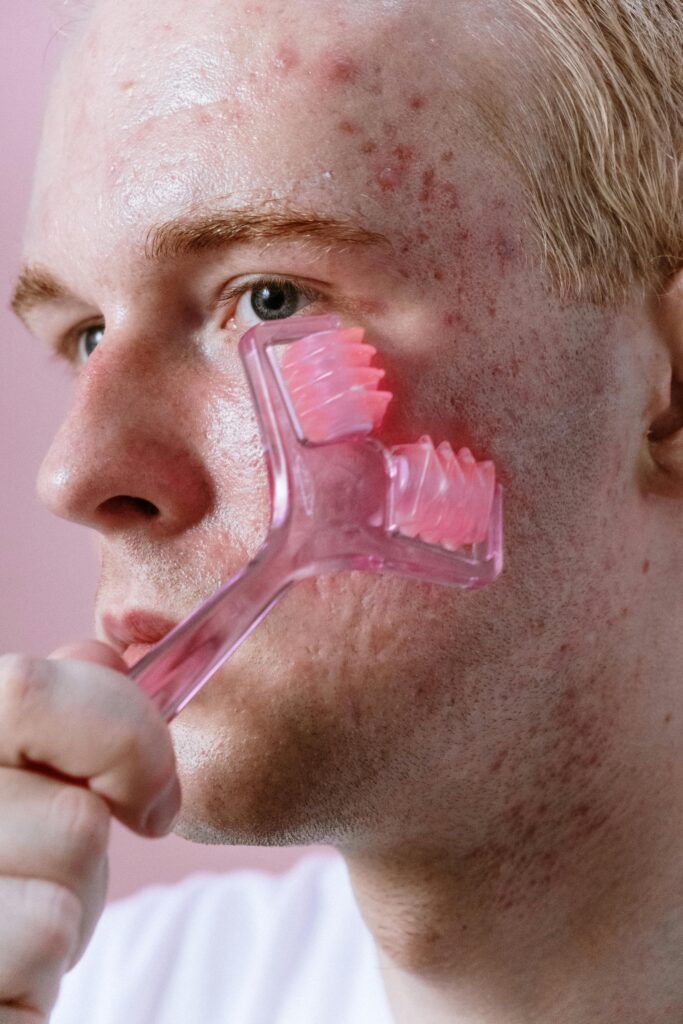
The acetic acid in ACV gives it direct antibacterial activity against the bacteria that cause acne. Specifically, it targets Propionibacterium acnes, the bacterium primarily responsible for inflamed breakouts, making it more than just a home remedy with no scientific basis.
This makes ACV a legitimate option for an ACV acne treatment targeting inflamed, bacteria-driven breakouts. It works best on:
- Mild to moderate inflammatory acne
- Red, inflamed blemishes rather than deep cystic spots
- Post-shave breakouts triggered by bacterial irritation
Chemical Exfoliation
ACV contains alpha-hydroxy acids, including lactic, citric, and malic acid. These work as gentle chemical exfoliants that:
- Remove dead skin cells from the surface
- Unclog pores and reduce blackhead buildup
- Fade post-acne marks and hyperpigmentation over time
This exfoliating action is what makes ACV useful as an acne toner, giving it a similar function to the AHA toners sold in skincare stores, at a fraction of the cost.
Balancing Skin pH
Healthy skin sits at a slightly acidic pH of around 4.5 to 5.5. When that balance is disrupted by harsh cleansers, shaving products, or environmental factors, the skin becomes more vulnerable to bacterial growth and inflammation. ACV’s natural acidity helps restore skin pH balance, creating a surface environment that is less hospitable to acne-causing bacteria.
Types of Apple Cider Vinegar Men Should Use for Acne
Not all apple cider vinegar is the same, and the type you buy makes a real difference when using it for acne. Here is what to look for:
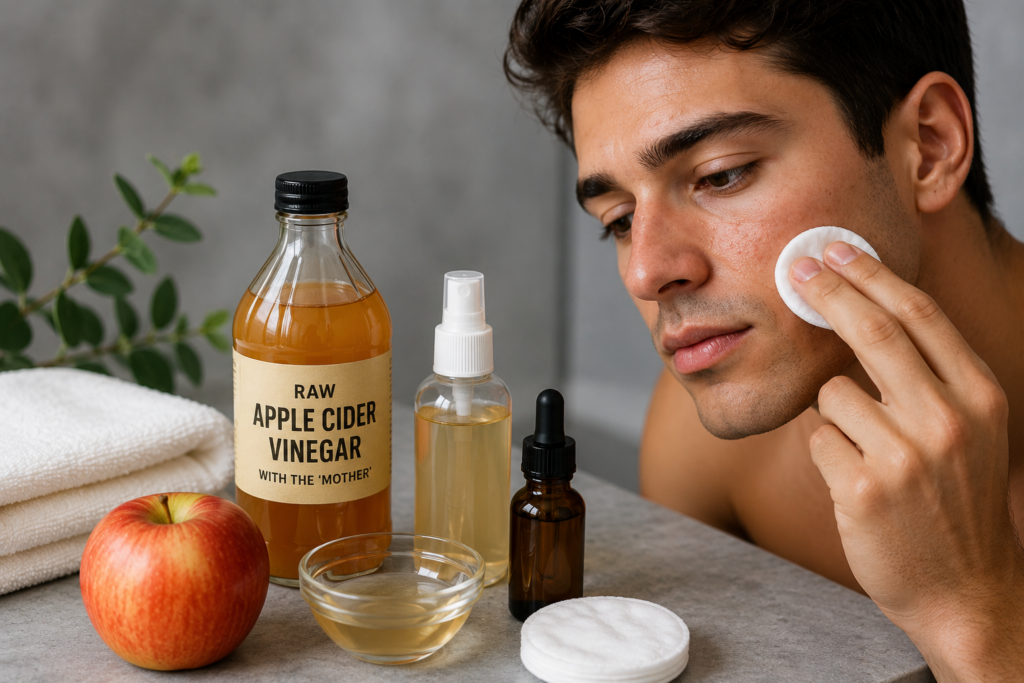
- Raw and unfiltered: This is non-negotiable. Processed ACV has been filtered and pasteurized, which removes the beneficial bacteria and enzymes that make it effective for skin
- With the mother: The “mother” is the cloudy, stringy sediment you see floating at the bottom of the bottle. It contains live cultures, beneficial bacteria, and enzymes that are thought to be responsible for many of ACV’s skin benefits. Always shake the bottle before use
- Organic: Organic ACV is produced without synthetic pesticides, making it a cleaner option for direct skin application
- 5% acidity: Most commercial ACV sits at around 5% acetic acid concentration, which is the standard effective range for skincare use
Brands like Bragg are widely available across the US and clearly labelled as raw, unfiltered, and containing the mother, making them a straightforward choice.
How to Dilute Apple Cider Vinegar for Male Skin?
Dilution is the single most important step when using ACV on your skin. According to Healthline, applying it directly without diluting can cause burns and increased irritation, which is the last thing you want when you are already dealing with active breakouts.
The right dilution ratio depends on your skin type:
- Sensitive skin: 1 part ACV to 5 parts water
- Normal skin: 1 part ACV to 3 to 4 parts water
- Oily or acne-prone skin: 1 part ACV to 3 parts water
- First-time users: Start at 1 part ACV to 5 parts water regardless of skin type, then gradually reduce the water ratio as your skin adjusts
Always do a patch test on a small area of your inner arm or jawline before applying to your full face. If you experience burning, stinging, or persistent redness after a patch test, dilute further or discontinue use entirely.
How to Use Apple Cider Vinegar for Men’s Acne?
Always start with a clean, dry face before applying ACV in any form. Never apply it to open wounds, freshly shaved skin, or active pustules that have broken the surface.
ACV as a Toner
Using ACV as a daily or twice-weekly acne toner is the most common and practical application method for most men.
What you need:
- 1 part raw ACV
- 3 to 4 parts water
- Cotton ball or pad
How to apply:
- Wash your face with a gentle cleanser and pat dry
- Mix your diluted ACV solution
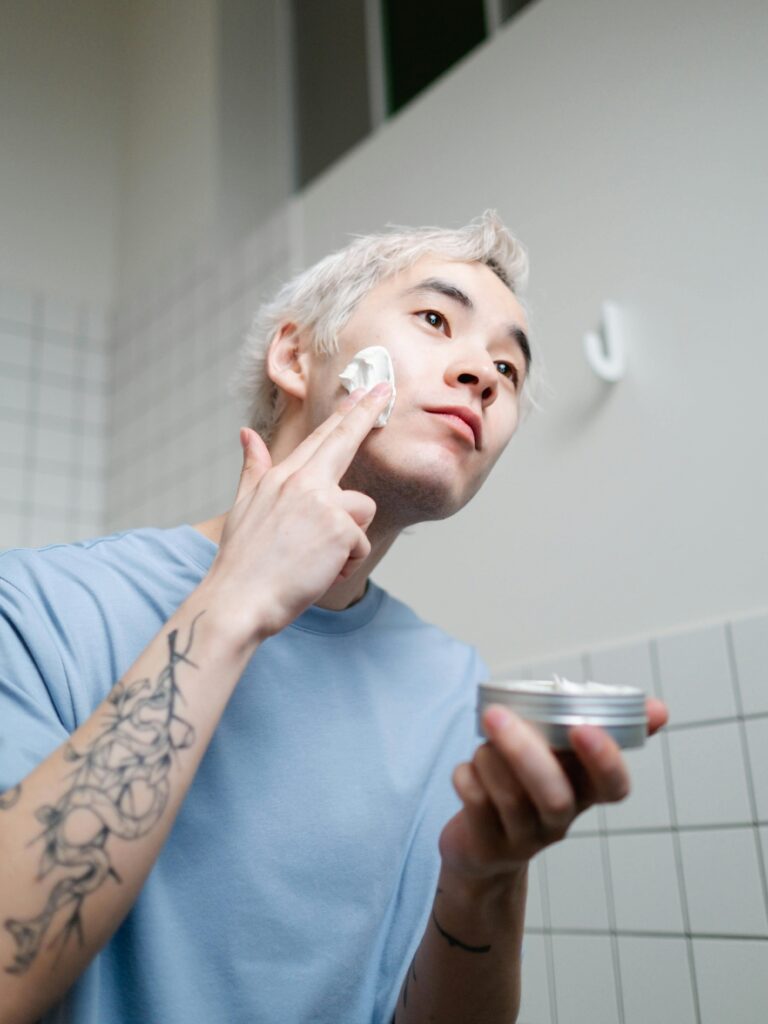
- Apply to the affected areas using a cotton ball
- Leave on for 5 to 20 seconds, then rinse thoroughly with cool water
- Follow with a lightweight, non-comedogenic moisturizer
- Apply SPF if using during the day, as ACV increases sun sensitivity
ACV as a Spot Treatment
For targeted breakouts rather than full-face application, a spot treatment approach gives you more control and reduces the risk of over-drying surrounding skin.
What you need:
- 1 part raw ACV
- 3 parts water
- Cotton swab
How to apply:
- Dip the cotton swab into the diluted solution
- Apply directly to individual blemishes only
- Leave on for 5 to 10 seconds maximum
- Rinse off and moisturize
ACV and Tea Tree Oil Treatment
Tea tree oil has demonstrated comparable effectiveness to benzoyl peroxide for acne in research settings. When combined with ACV, it creates a more potent natural treatment that targets bacteria from two angles.
What you need:
- 1 part raw ACV
- 3 parts water
- 1 to 2 drops of tea tree oil
How to apply:
- Mix all ingredients together
- Apply to affected areas with a cotton ball
- Leave on for 5 to 15 seconds
- Rinse thoroughly and moisturize
Note:
Tea tree oil must also be diluted before use. Never apply it directly to the skin at full concentration.
What to Expect in the First Few Weeks?
ACV is not an overnight fix. Most men notice reduced redness and oiliness within one to two weeks, but meaningful acne improvement takes four to six weeks of consistent use.
One thing to be aware of is skin purging. The exfoliating acids in ACV can temporarily bring impurities to the surface, causing more breakouts in the first two to three weeks. This is normal. If it continues beyond that, stop using it and consult a dermatologist.
Keep these in mind:
- Works on mild to moderate acne, not severe or cystic breakouts
- Two to three times per week beats inconsistent daily use
- ACV increases sun sensitivity, so SPF is essential
- It complements a skincare routine; it does not replace one
Side Effects and Who Should Avoid It
ACV is not suitable for every skin type or situation. Here is what to watch out for before adding it to your routine.
Who should avoid it entirely:
- Men with a known sensitivity to acetic acid or vinegar
- Anyone with open wounds, active pustules, or severely compromised skin
- Men using prescription retinoids or strong topical acne medications without dermatologist’s guidance
- Anyone who experiences persistent burning or redness after a correctly diluted patch test
Possible side effects to watch for:
- Stinging or burning on application, particularly on recently shaved skin
- Increased dryness, especially in men with already dry or combination skin
- Temporary skin purging in the first two to three weeks
- Increased sun sensitivity requiring daily SPF use
- Chemical burns if applied undiluted or left on for too long
If any of these persist beyond a few days of use, rinse thoroughly with cool water and stop using ACV on your skin.
Takeaway
Apple cider vinegar for men’s acne is not a magic fix, but it is a useful natural remedy when used correctly. Its antibacterial properties, exfoliating acids, and ability to restore skin pH balance make it a practical addition to a man’s skincare routine, particularly for mild to moderate breakouts and post-shave irritation.
The key is dilution, timing, and consistency. Start low, go slow, and give it six weeks before deciding whether it is working for your skin. Used correctly, it is one of the more cost-effective and accessible natural acne treatments available.
FAQs
Does apple cider vinegar for men’s acne actually work?
ACV contains acetic acid and alpha-hydroxy acids that have real antibacterial and exfoliating properties. It works best on mild to moderate acne and is most effective when used consistently as part of a broader skincare routine rather than as a standalone treatment.
How do I use apple cider vinegar as an acne toner?
Mix one part ACV with three to four parts water, apply to clean skin with a cotton ball, leave for five to twenty seconds, then rinse and moisturize. Use two to three times per week and always apply SPF afterward if going outdoors.
How long does it take for ACV to clear acne?
Most men see initial improvement in redness and oiliness within one to two weeks. Meaningful reduction in acne typically takes four to six weeks of consistent use. Skin purging in the first two to three weeks is normal and should resolve on its own.
Can ACV help with skin pH balance for acne-prone skin?
Yes. Healthy skin sits at a pH of 4.5 to 5.5. ACV’s natural acidity helps restore that balance when it has been disrupted by harsh cleansers or shaving products, making the skin surface less hospitable to acne-causing bacteria.
Is apple cider vinegar safe to use on male skin every day?
Daily use is generally not recommended, particularly for men who shave regularly. Two to three times per week is the safer starting point. Daily use increases the risk of over-drying and irritation, especially on recently shaved skin.