Honey has been used for skin healing for centuries, but its potential as an acne treatment for men is something most guys have never considered. A honey mask for male acne is one of the most straightforward natural remedies available, costs next to nothing, and works without the dryness and irritation that come with most over-the-counter treatments.
This guide covers exactly how honey works against acne, which type gives the best results, and how to apply it correctly so you are not just smearing grocery store honey on your face and hoping for the best.
Why Men Are More Prone to Acne?
Men produce significantly more sebum than women due to higher testosterone levels that constantly stimulate the skin’s oil glands. That excess oil clogs pores, creates a breeding ground for acne-causing bacteria, and leads to the kind of persistent, inflamed breakouts that are harder to shift than the occasional spot.
Male skin is also around 25% thicker than female skin, with larger pores that trap oil and debris more easily. Daily shaving adds another layer of irritation, causing micro-cuts, razor bumps, and ingrown hairs that can trigger or worsen existing breakouts.
What Makes Honey Effective Against Acne?
Honey contains natural compounds that actively work against acne-causing bacteria, inflammation, and skin damage. It is one of the few natural acne masks supported by research rather than just skincare trends.
1. Natural Antibacterial Properties
Honey produces hydrogen peroxide through an enzymatic process, giving it natural antibacterial activity against the bacteria that trigger acne inflammation. Research backs this up, too. A study found that Manuka honey inhibited Staphylococcus aureus at 10.4mm, nearly double the 6mm recorded for the control treatment, a meaningful difference when it comes to fighting acne-causing bacteria on the skin.
Inflamed, red breakouts respond to this kind of antibacterial action better than surface-level blackheads do. Antibacterial face masks built around honey get to the bacterial root cause of those deep, painful spots that shaving irritation and excess oil tend to trigger.
2. Anti-Inflammatory Benefits
Beyond killing bacteria, honey actively reduces redness and swelling around existing blemishes. This is especially useful for men who shave regularly, as post-shave inflammation and razor bumps respond well to honey’s calming properties.
Applying a raw honey skin treatment to irritated areas after shaving can reduce redness and prevent minor cuts from becoming infected spots. It works gently without stripping the skin barrier, which is a common problem with alcohol-based aftershave products.
3. Wound Healing and Skin Repair
Honey has been used in clinical wound care for decades. Its ability to draw out excess moisture, create a protective barrier over damaged skin, and promote tissue repair makes it useful for acne scarring and post-breakout marks.
For men dealing with acne scars or hyperpigmentation left behind by past breakouts, regular honey mask use can visibly improve skin texture over time. It will not erase deep scars, but it does support the skin’s natural repair process without causing further irritation.
Best Types of Honey for Acne Treatment
Not all honey is equal when it comes to treating acne. Processed honey sold in most grocery stores has been heated and filtered, which removes the active enzymes responsible for its antibacterial properties. For acne treatment, the type of honey you choose matters significantly.
Manuka Honey
Manuka honey is widely considered the most effective option for acne treatment. It contains methylglyoxal (MGO), a compound that gives it antibacterial activity even when hydrogen peroxide is blocked, making it more potent and more stable than regular honey. Look for a Manuka honey with a UMF rating of 10 or higher for meaningful antibacterial activity.
It is more expensive than other options, typically ranging from $20 to $50 per jar, but a small amount goes a long way when used as a spot treatment or mask.
Raw Honey
Raw honey is the most accessible and affordable option. Unlike processed honey, raw honey retains its natural enzymes, antioxidants, and antibacterial compounds. Natural acne masks made with raw honey are a practical starting point for men new to honey-based skincare.
When buying raw honey, look for products labelled clearly as “raw” and “unfiltered.” Standard supermarket honey, even if marketed as natural, is rarely suitable for acne treatment due to processing.
Buckwheat Honey
Buckwheat honey is a darker, stronger variety with a higher antioxidant content than most other types. It is less commonly discussed in skincare but has demonstrated strong antimicrobial properties in research settings.
It has a thicker consistency than lighter honeys, which makes it easier to apply as a mask without dripping. For men with particularly oily or combination skin, buckwheat honey is worth considering as an alternative to Manuka.
How to Make and Apply a Honey Mask for Male Acne?
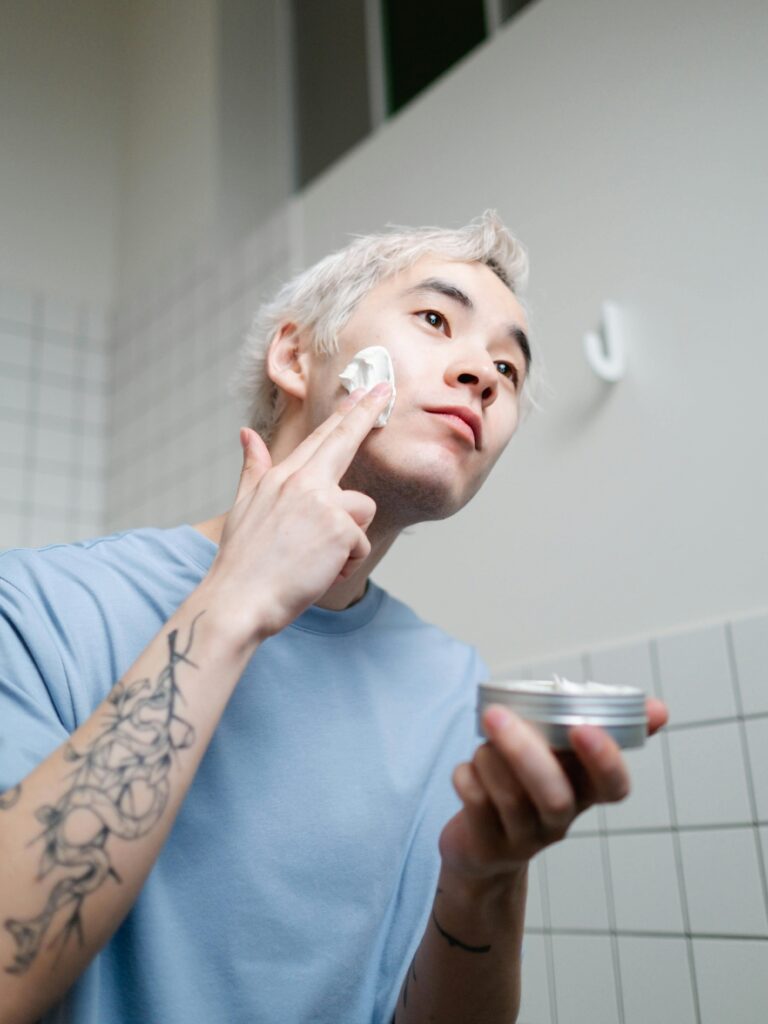
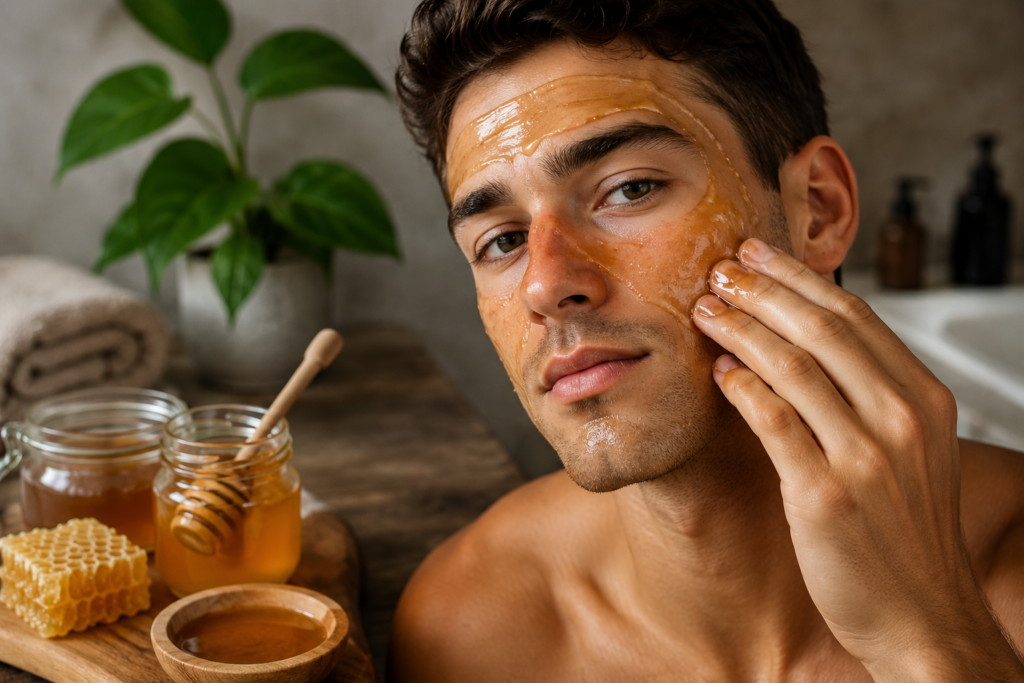
Applying a honey mask is straightforward, but doing it correctly makes a real difference to the results. Always start with clean, dry skin and apply the mask with clean fingers or a silicone brush. Leave it on for 10 to 20 minutes before rinsing with lukewarm water.
Basic Honey Mask
The simplest option and a good starting point for most men.
What you need:
- 1 tablespoon of raw or Manuka honey
How to apply:
- Wash your face with a gentle cleanser and pat dry
- Apply a thin, even layer of honey across the affected areas
- Leave it on for 15 to 20 minutes
- Rinse thoroughly with lukewarm water and follow with a lightweight moisturizer
Honey and Cinnamon Mask
Cinnamon has its own antibacterial properties and works well in combination with honey against acne-causing bacteria. Research published in PMC found that the combination of cinnamon and honey showed additive antibacterial activity against Propionibacterium acnes, one of the primary bacteria responsible for acne.
What you need:
- 1 tablespoon of raw honey
- 1 teaspoon of ground cinnamon
How to apply:
- Mix honey and cinnamon into a paste
- Apply to clean skin and leave for 10 to 15 minutes
- Rinse thoroughly with lukewarm water
Note: Do a patch test before applying cinnamon to your full face. Some men find cinnamon irritating, particularly on sensitive or recently shaved skin.
Honey and Lemon Mask
Lemon juice contains citric acid, which helps brighten skin and reduce post-acne marks. Combined with honey, it creates a mask that targets both active breakouts and the discoloration they leave behind.
What you need:
- 1 tablespoon of raw honey
- Half a teaspoon of fresh lemon juice
How to apply:
- Mix honey and lemon juice together
- Apply to clean skin and leave for 10 minutes maximum
- Rinse thoroughly and apply SPF before going outdoors, as lemon juice increases sun sensitivity
Important:
Avoid this mask if you have open wounds, active irritation, or very sensitive skin. Lemon juice can sting on broken skin.
Potential Side Effects and Who Should Avoid It
Honey is gentle enough for most skin types, but it is not suitable for everyone. Here is what to watch out for before adding a honey mask to your routine.
Who should be cautious:
- Men with a bee or pollen allergy should avoid honey masks entirely and consult a dermatologist before using any bee-derived skincare product
- Those with very dry skin may find honey draws too much moisture from the skin surface if left on too long
- Men using prescription retinoids or strong acne medications should check with their dermatologist before adding new topical treatments
Possible side effects:
- Mild stinging on broken or irritated skin
- Redness or itching in men with pollen sensitivities
- Skin irritation when combined with cinnamon or lemon, if not patch tested first
If you experience persistent redness, swelling, or itching after using a honey mask, discontinue use and consult a dermatologist.
Final Thoughts
A honey mask for male acne is not a replacement for clinical treatment when acne is severe, but it is a genuinely effective, low-risk option for men dealing with mild to moderate breakouts. Its antibacterial, anti-inflammatory, and skin-repairing properties make it one of the most practical natural acne treatments available.
Start with a basic raw honey mask two to three times per week, give it six weeks of consistent use, and adjust from there based on how your skin responds. Simple, consistent, and backed by real science, it is worth adding to your routine.
FAQs
Does a honey mask for male acne actually work?
Yes, honey has real antibacterial and anti-inflammatory properties that can reduce acne-causing bacteria and calm inflamed breakouts. It works best on mild to moderate acne and red, inflamed blemishes rather than blackheads or deep cystic acne.
How long does it take to see results from a honey mask?
Most men notice a reduction in redness and inflammation after the first few uses. For meaningful improvement in overall acne, consistent use two to three times per week for four to six weeks gives a more accurate picture of results.
Can I use a honey mask every day as a natural acne mask?
Daily use is generally safe given honey’s gentle nature, but two to three times per week is the recommended starting point. Daily use is better suited to spot treatment rather than a full-face mask application.
Is raw honey skin treatment better than processed honey for acne?
Yes. Processed honey loses its active enzymes during heating and filtering, removing the antibacterial properties that make it effective for acne. Always use raw, unfiltered honey for skincare purposes.
Can a honey mask help with acne scars and post-breakout marks?
Honey supports skin repair and can gradually improve the appearance of post-acne marks and mild scarring over time. It will not eliminate deep scars but does support the skin’s natural healing process without causing further irritation.